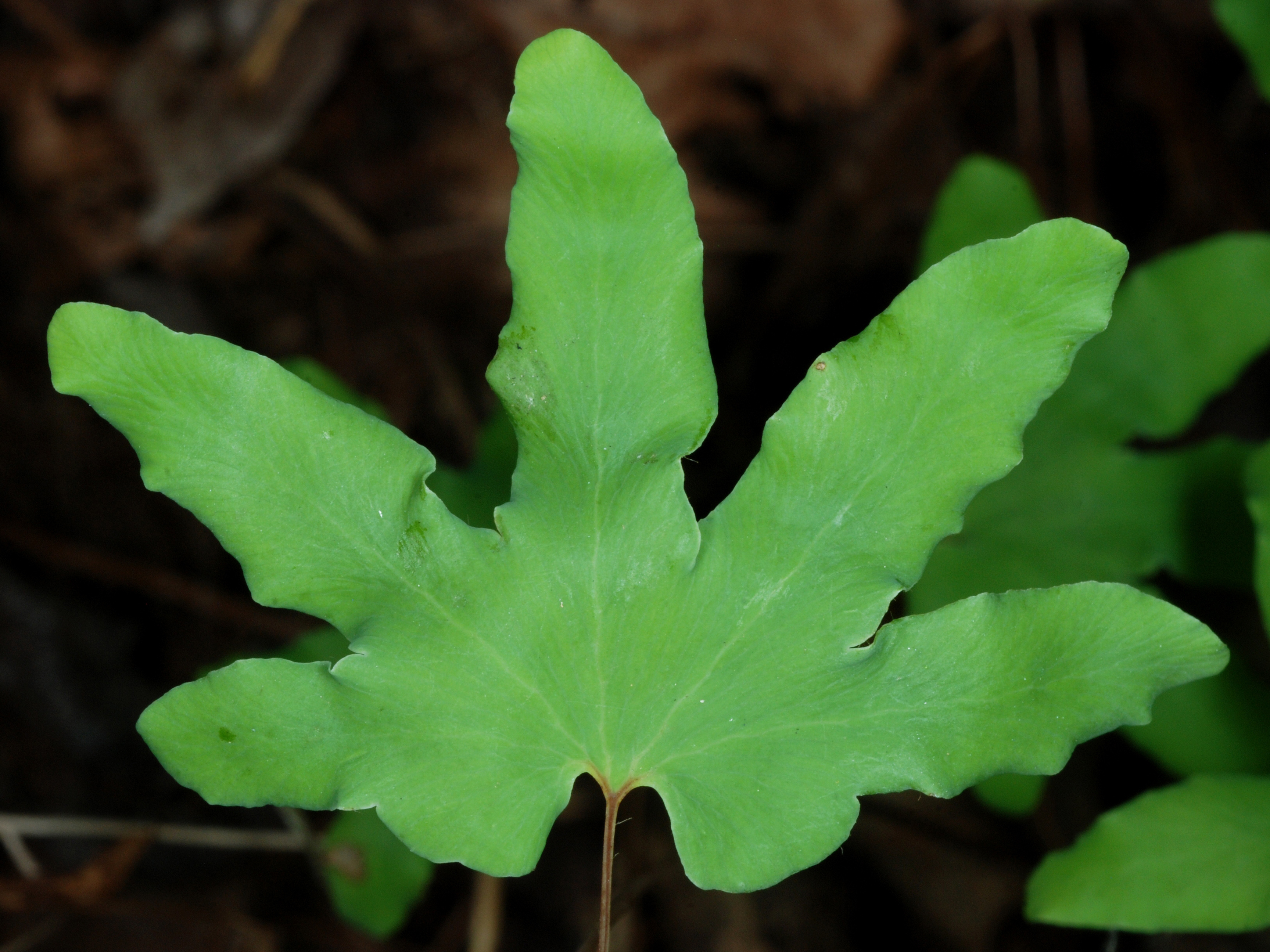
American Climbing Fern
Quick Facts & Botanical Stats
Species Overview
American Climbing Fern is one of the few true climbing ferns native to temperate North America.
Physical Appearance & Anatomy
Twining fronds with palm-shaped leaflets that climb up surrounding shrubs and small trees.
Habitat & Growth Behavior
Climbs nearby vegetation to access light in dense moist thickets.
Ecological Role & Symbioses
Provides tangled vine shelter for nesting birds and tree frogs.
Reproduction, Lifecycle & Propagation
Upper leaflets produce tiny finger-like lobes bearing spore cases.
Conservation Status & Environmental Threats
Protected in several eastern states due to historic over-collection.
Interesting Fun Facts
- In the 1800s, it was so heavily picked for Christmas decorations that Connecticut passed America's first plant conservation law to protect it.
- Its 'stem' is actually a continuously growing leaf frond.
Related Plants

Boston Fern
Least ConcernWhat is a Boston fern? The Boston fern (Nephrolepis exaltata 'Bostoniensis') is a popular species of fern belonging to the Lomariopsidaceae family. Native to humid, tropical woodlands and swamps, it is globally famous for its lush, arching, feathery fronds. Discovered in a shipment of ferns from Boston to Philadelphia in 1894, it became a classic Victorian houseplant. Like all ferns, it is a non-flowering vascular plant that reproduces via spores rather than seeds.

Ostrich Fern
Least ConcernWhat is an ostrich fern? The ostrich fern (Matteuccia struthiopteris) is a large crown-forming deciduous fern belonging to the Onocleaceae family. Native to temperate regions of North America and Eurasia, it is named for its large, upright, feathery green fronds that resemble ostrich feathers. Are ostrich ferns edible? Yes, the tightly coiled young fronds, known as fiddleheads, are harvested in spring and eaten as a seasonal delicacy in North America and Japan.