Crested Euphorbia
Quick Facts & Botanical Stats
Species Overview
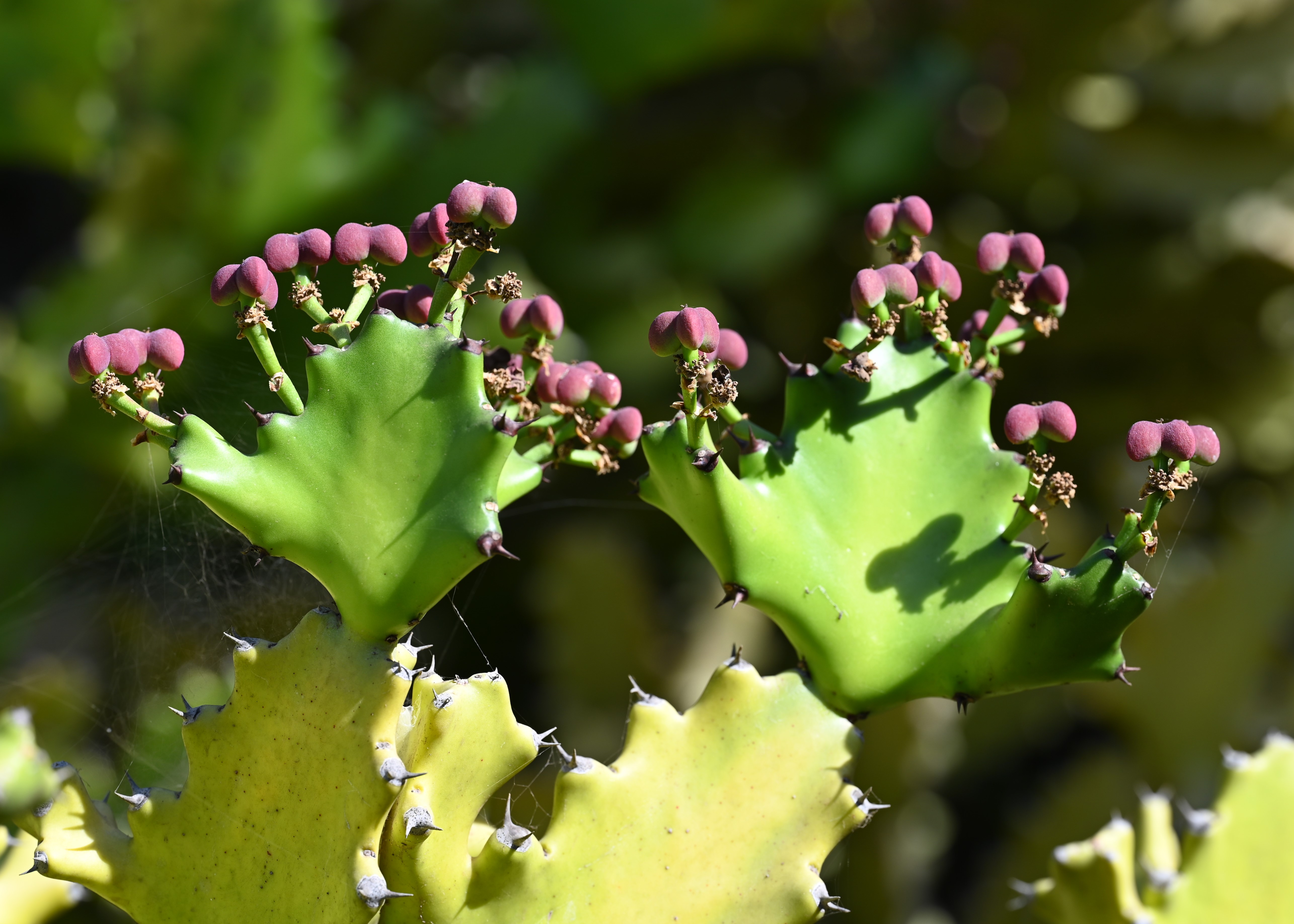
Crested Euphorbia features wavy, fan-shaped crests resembling ocean coral formations.
Physical Appearance & Anatomy
Fleshy, undulating fan-shaped green stems edged with tiny spines and pale markings.
Habitat & Growth Behavior
Stores water in thick crested tissue to survive prolonged droughts.
Ecological Role & Symbioses
Deters herbivores with sharp spines and toxic milky sap.
Reproduction, Lifecycle & Propagation
Reproduces primarily by stem cuttings and rare seed production.
Conservation Status & Environmental Threats
Extensively cultivated worldwide.
Interesting Fun Facts
- Often grafted onto a rootstock of another cactus to create the popular 'Coral Cactus'.
- Exudes a toxic milky latex sap when cut that irritates eyes and skin.
Related Plants

Saguaro Cactus
Least ConcernWhat is a Saguaro Cactus? Carnegiea gigantea, the saguaro, is a massive, tree-like cactus species belonging to the Cactaceae family. It is the iconic symbol of the American Southwest and is native exclusively to the Sonoran Desert. Growing slowly over two centuries, the saguaro develops a thick, ribbed trunk and characteristic branching arms. Saguaros are keystone species in their desert ecosystem, providing nesting sites, moisture, and food for dozens of desert animals.

Aloe Vera
Least ConcernWhat is Aloe Vera? Aloe vera is a succulent plant species belonging to the Asphodelaceae family. Cultivated globally for its medicinal and cosmetic uses, it has been prized for thousands of years. The plant is famous for the thick, soothing gel found inside its leaves, which is used to treat burns, wounds, and skin conditions. Aloe vera is a hardy xerophyte, adapted to thrive in hot, arid regions with minimal rainfall.