Hart's Tongue Fern
Quick Facts & Botanical Stats
Species Overview
What is a Hart's Tongue Fern? The Hart's tongue fern (Asplenium scolopendrium) is an evergreen fern in the Aspleniaceae family. Unlike typical ferns with feathery, divided leaves, this species is famous for its simple, undivided, strap-like fronds. It grows in cool, damp, rocky limestone environments. The name 'Hart' is an old English word for a male red deer, as the leaves resemble a deer's tongue.
Physical Appearance & Anatomy
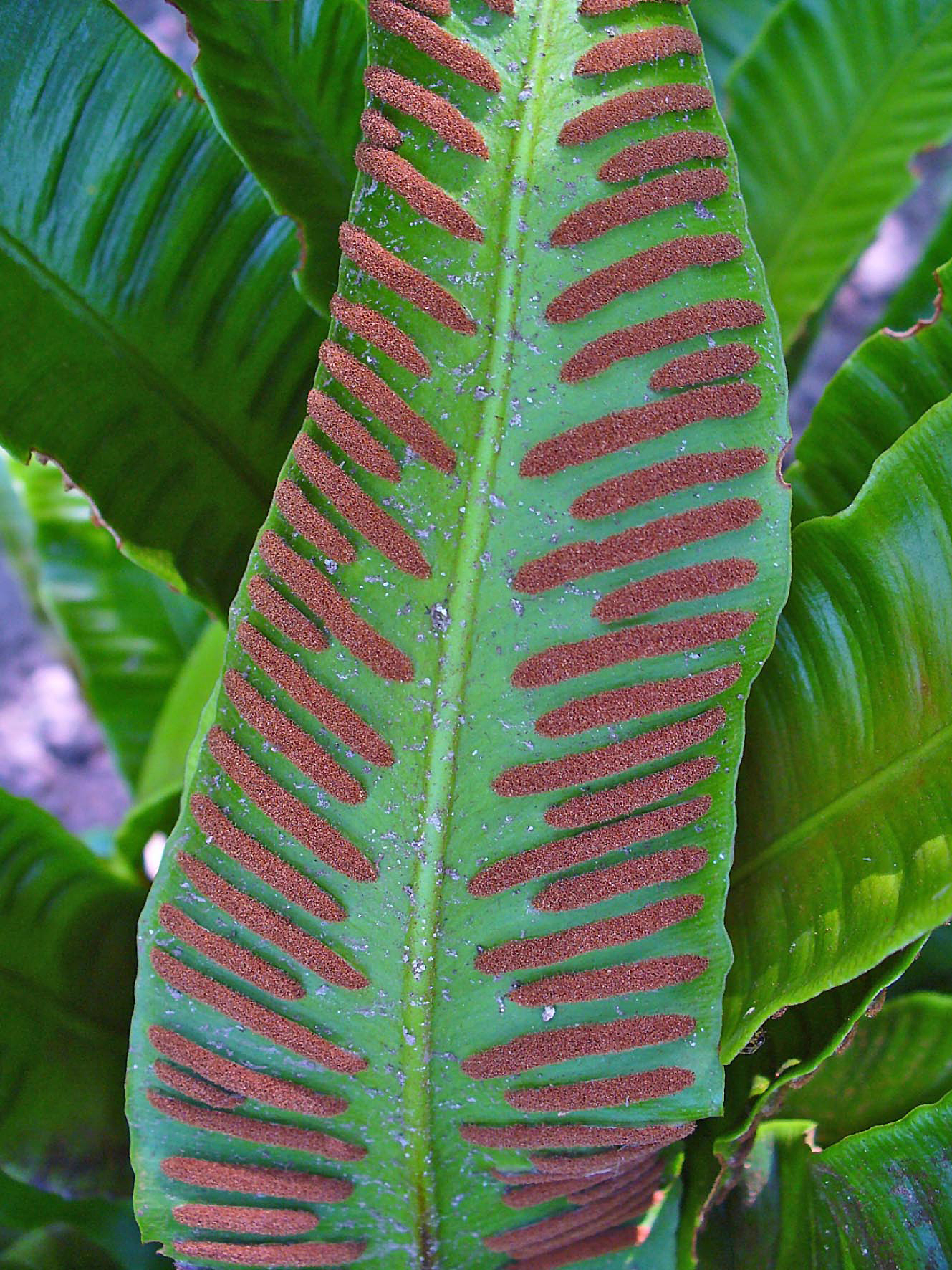
What does a Hart's tongue fern look like? The fern grows in rosette-like clumps. Its fronds are strap-shaped, tongue-like, smooth, and glossy bright green with wavy margins and a cordate (heart-shaped) base. How do its spores grow? On the underside of the leaves, the spores are produced in long, parallel, brown stripes (sori) that look like the legs of a centipede.
Habitat & Growth Behavior
Where do these ferns grow? They thrive in cool, moist, shaded habitats, particularly on rocky limestone slopes, ravine walls, damp mortar of old walls, and wet sinkholes. They require high humidity and alkaline, humus-rich soils. The evergreen fronds remain active through winter under snow cover, and new leaves unroll in spring from the center of the crown.
Ecological Role & Symbioses
What is the ecological role of the Hart's tongue fern? In rocky limestone forests, it stabilizes mossy rock piles and provides shelter for land snails, beetles, and amphibians. Is it eaten by animals? The tough, leathery foliage is resistant to deer and rabbits, but provides shelter and moisture-rich microclimates for forest floor invertebrates.
Reproduction, Lifecycle & Propagation
Like other ferns, it reproduces via spores. The linear sori on the leaf underside release spores in late summer. Wind disperses the spores, which germinate on moist, alkaline rock faces to form the gametophyte stage. Sexual reproduction occurs in wet conditions, developing a new sporophyte fern. Vegetatively, they propagate slowly by crown division.
Conservation Status & Environmental Threats
Asplenium scolopendrium is classified as Least Concern in Europe, where it is common. However, the American subspecies (var. americanum) is extremely rare and listed as Threatened in the US, restricted to moist limestone sinkholes. Threats include quarrying, deforestation, climate change drying out sinkholes, and illegal collecting by fern enthusiasts.
Interesting Fun Facts
- Unlike most ferns, this species has simple, strap-shaped leaves that are not divided into smaller leaflets, looking like green tongues.
- The common name comes from the old English word 'Hart' (male deer), because the leaves resemble a deer's tongue.
- The scientific species name 'scolopendrium' is Greek for 'centipede', referring to the parallel spore lines on the leaf back.
- It is an indicator species for ancient, undisturbed deciduous woodlands with limestone soils.
Related Plants

Maidenhair Fern
Least ConcernWhat is the Maidenhair Fern? Adiantum capillus-veneris, the maidenhair fern, is a delicate, elegant fern species in the Pteridaceae family. Found worldwide, it is famous for its fan-shaped leaflets and thin, black, wire-like leaf stalks. It grows in damp crevices on limestone rocks and near waterfalls, adapted to high-moisture environments. The name 'Adiantum' comes from Greek, meaning 'unwetted', as its leaves repel water.

Boston Fern
Least ConcernWhat is a Boston fern? The Boston fern (Nephrolepis exaltata 'Bostoniensis') is a popular species of fern belonging to the Lomariopsidaceae family. Native to humid, tropical woodlands and swamps, it is globally famous for its lush, arching, feathery fronds. Discovered in a shipment of ferns from Boston to Philadelphia in 1894, it became a classic Victorian houseplant. Like all ferns, it is a non-flowering vascular plant that reproduces via spores rather than seeds.