Blue Chalksticks
Quick Facts & Botanical Stats
Species Overview
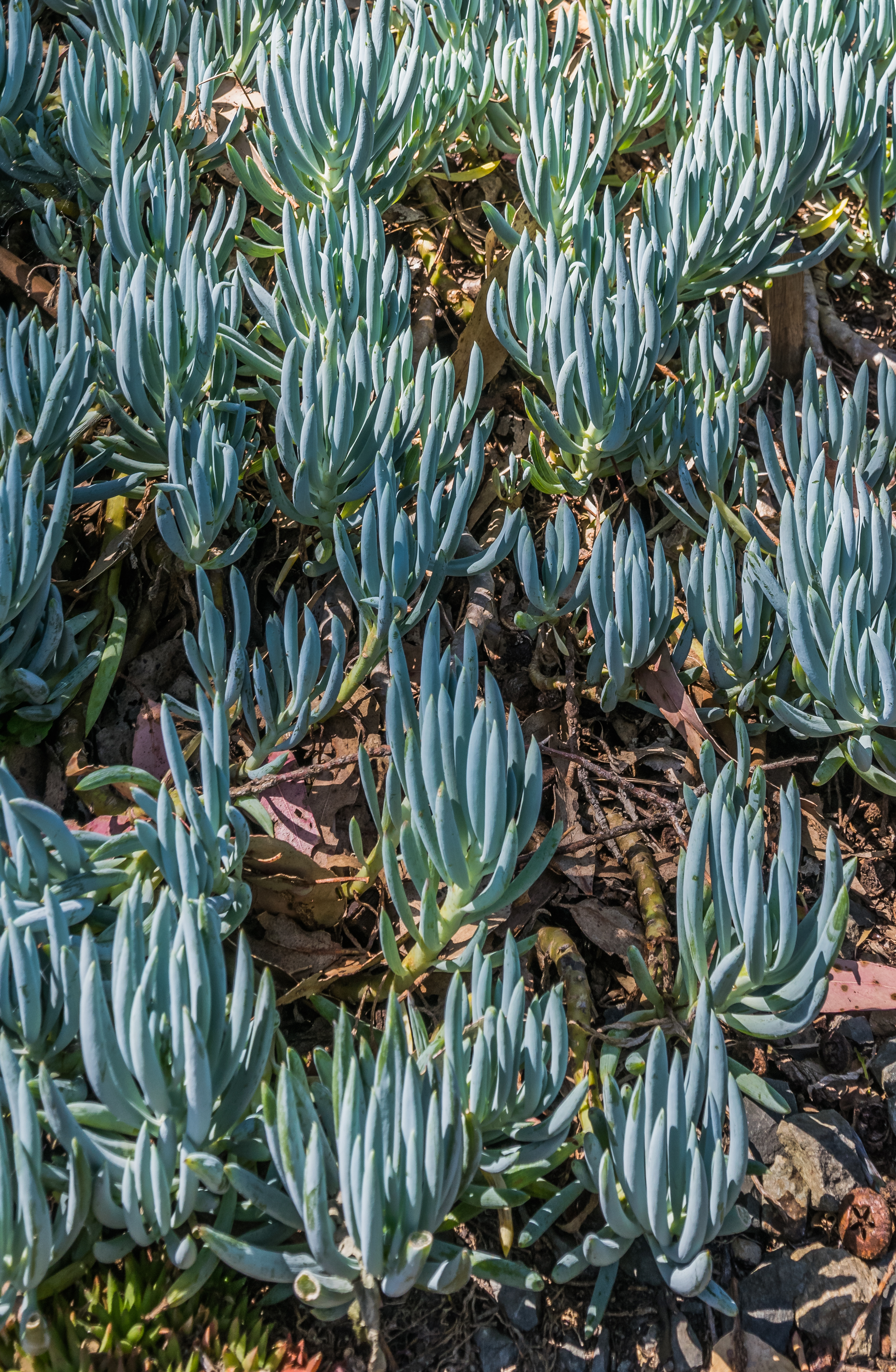
Blue Chalksticks is a groundcover succulent with powdery silver-blue, chalk-like cylindrical leaves.
Physical Appearance & Anatomy
Dense mats of upright, finger-like chalky blue fleshy leaves that flush purple under sunlight.
Habitat & Growth Behavior
Forms low, fire-resistant drought-tolerant ground cover.
Ecological Role & Symbioses
Suppresses weeds and stabilizes dry sandy hillside soils.
Reproduction, Lifecycle & Propagation
Produces small white to pale yellow flowers in summer.
Conservation Status & Environmental Threats
Widely cultivated and stable.
Interesting Fun Facts
- The powdery chalk bloom protects leaves from sunscald and reduces evaporation.
- One of the most popular blue-hued landscape plants in Mediterranean gardens.
Related Plants

Saguaro Cactus
Least ConcernWhat is a Saguaro Cactus? Carnegiea gigantea, the saguaro, is a massive, tree-like cactus species belonging to the Cactaceae family. It is the iconic symbol of the American Southwest and is native exclusively to the Sonoran Desert. Growing slowly over two centuries, the saguaro develops a thick, ribbed trunk and characteristic branching arms. Saguaros are keystone species in their desert ecosystem, providing nesting sites, moisture, and food for dozens of desert animals.

Aloe Vera
Least ConcernWhat is Aloe Vera? Aloe vera is a succulent plant species belonging to the Asphodelaceae family. Cultivated globally for its medicinal and cosmetic uses, it has been prized for thousands of years. The plant is famous for the thick, soothing gel found inside its leaves, which is used to treat burns, wounds, and skin conditions. Aloe vera is a hardy xerophyte, adapted to thrive in hot, arid regions with minimal rainfall.