Giant Sun Pitcher
Quick Facts & Botanical Stats
Species Overview
Giant Sun Pitcher is a shrubby carnivorous plant that grows on ancient cloud-shrouded tepui plateaus.
Physical Appearance & Anatomy
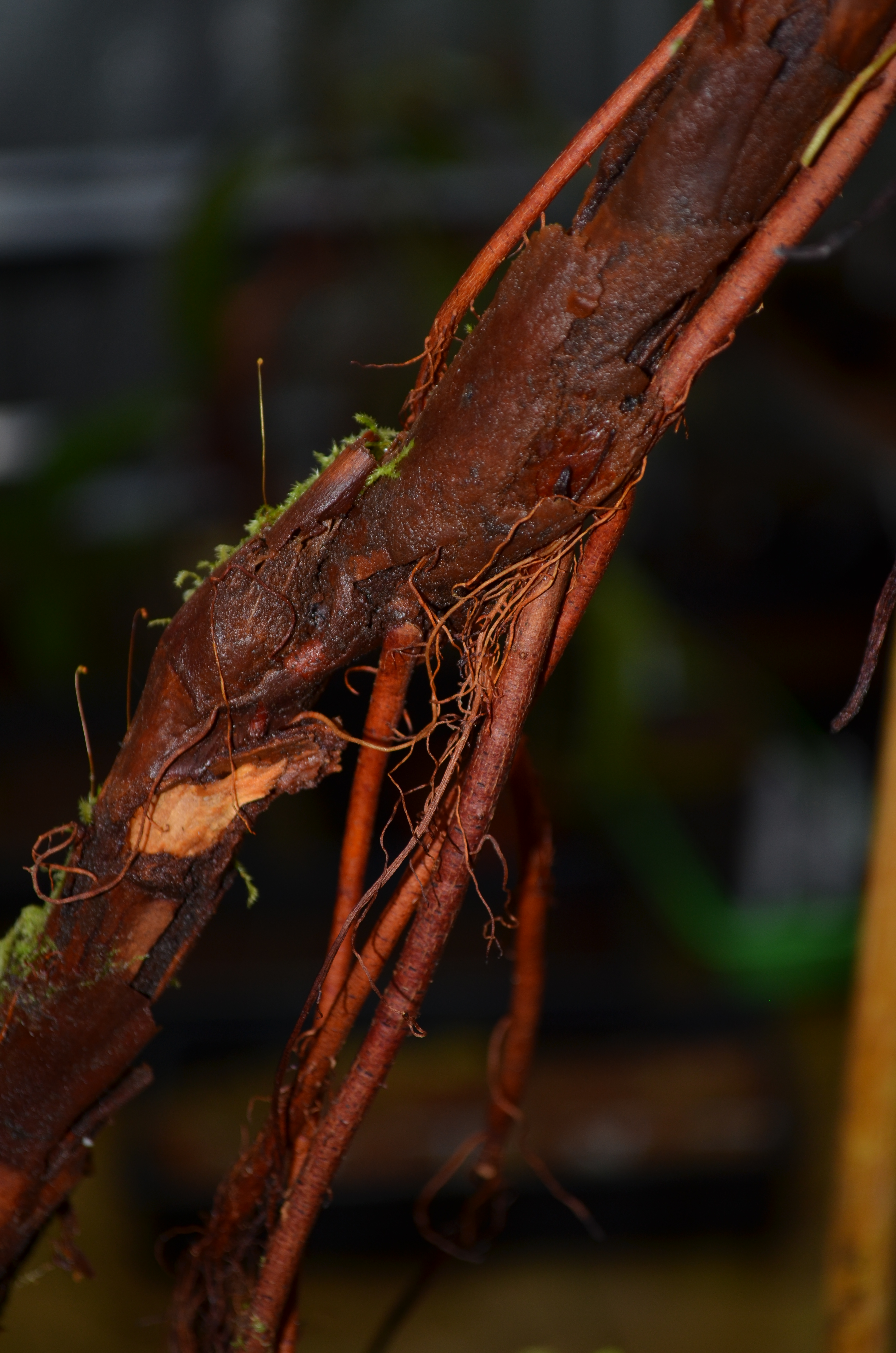
Woody stems supporting large tubular green and red pitchers with spoon-shaped nectar spoons.
Habitat & Growth Behavior
Pitchers trap rainwater and digest insects in high-altitude ultra-clean environments.
Ecological Role & Symbioses
Acts as a dominant carnivore on nutrient-devoid sandstone summits.
Reproduction, Lifecycle & Propagation
Produces bell-shaped white and pink nodding flowers.
Conservation Status & Environmental Threats
Protected within Canaima National Park.
Interesting Fun Facts
- It is one of the few carnivorous plant species that grows a tall woody stem.
- Tepuis where it grows are isolated 'islands in the sky' that inspired Arthur Conan Doyle's *The Lost World*.
Related Plants

Venus Flytrap
EndangeredWhat is a Venus flytrap? The Venus flytrap (Dionaea muscipula) is a small carnivorous plant belonging to the Droseraceae family. Native exclusively to the nitrogen-poor coastal bogs of North and South Carolina, it is globally famous for its rapid, active leaf traps. Why is the Venus flytrap carnivorous? Because it grows in nutrient-starved, acidic soil, it has evolved traps to catch insects, digesting them to absorb essential nitrogen and phosphorus. Charles Darwin famously described the Venus flytrap as 'one of the most wonderful plants in the world'.

Tropical Pitcher Plant
Least ConcernWhat is a tropical pitcher plant? Nepenthes rafflesiana is a species of carnivorous climbing vine belonging to the Nepenthaceae family. Native to the hot, humid lowlands of Borneo and Sumatra, it is famous for its large, urn-shaped pitcher leaves that trap and digest prey. How do pitcher plants catch insects? Unlike the active Venus flytrap, pitcher plants use passive pitfall traps. Insects are lured by nectar, slip on the waxy rim, fall into a pool of digestive fluid, and dissolve.