Carnivorous Plants
Predatory plants that derive some or most of their nutrients from trapping and consuming insects and other arthropods, adapted to nutrient-poor soils.

Venus Flytrap
EndangeredWhat is a Venus flytrap? The Venus flytrap (Dionaea muscipula) is a small carnivorous plant belonging to the Droseraceae family. Native exclusively to the nitrogen-poor coastal bogs of North and South Carolina, it is globally famous for its rapid, active leaf traps. Why is the Venus flytrap carnivorous? Because it grows in nutrient-starved, acidic soil, it has evolved traps to catch insects, digesting them to absorb essential nitrogen and phosphorus. Charles Darwin famously described the Venus flytrap as 'one of the most wonderful plants in the world'.

Tropical Pitcher Plant
Least ConcernWhat is a tropical pitcher plant? Nepenthes rafflesiana is a species of carnivorous climbing vine belonging to the Nepenthaceae family. Native to the hot, humid lowlands of Borneo and Sumatra, it is famous for its large, urn-shaped pitcher leaves that trap and digest prey. How do pitcher plants catch insects? Unlike the active Venus flytrap, pitcher plants use passive pitfall traps. Insects are lured by nectar, slip on the waxy rim, fall into a pool of digestive fluid, and dissolve.

Cape Sundew
Least ConcernWhat is a cape sundew? The cape sundew (Drosera capensis) is a small carnivorous plant belonging to the Droseraceae family. Native to South Africa, it is one of the most famous sundew species. How do sundews trap insects? It uses flypaper-like traps, consisting of leaves lined with tentacles that secrete sticky, glistening droplets of mucilage. Insects are attracted to the drops, get stuck, and the leaf slowly rolls up around them to digest them and extract nutrients.

Trumpet Pitcher
Least ConcernWhat is a trumpet pitcher? The trumpet pitcher (Sarracenia flava), or yellow pitcher plant, is a carnivorous plant in the Sarraceniaceae family. Native to wet savannas of the American South, it is famous for its tall, vertical, trumpet-shaped leaves that trap insects. Why is it carnivorous? It grows in nitrogen-poor, acidic peat bogs, using passive pitfall traps to digest insects for nutrients.

Common Butterwort
Least ConcernWhat is a butterwort? The common butterwort (Pinguicula vulgaris) is a small carnivorous plant in the Lentibulariaceae family. Found across cold northern latitudes and alpine slopes, it is famous for its rosette of greasy, yellowish-green leaves. It uses flypaper-like traps to catch insects, secreting sticky mucilage from glandular hairs on its leaves.

Common Bladderwort
Least ConcernWhat is a bladderwort? The common bladderwort (Utricularia vulgaris) is an aquatic carnivorous plant in the Lentibulariaceae family. Floating freely in ponds, it lacks roots and leaves. How does it catch prey? It is famous for its suction traps, which are small, air-filled bladders. When an aquatic insect touches the trigger hairs, the bladder door opens, sucking in the prey in milliseconds, making it one of the fastest movements in nature.

Cobra Lily
Least ConcernWhat is the Cobra Lily? Darlingtonia californica, the cobra lily or California pitcher plant, is a carnivorous plant in the Sarraceniaceae family. It is famous for its bulbous, hooded leaves that look like a striking cobra snake. How does it catch insects? Unlike Sarracenia, it uses a lobster-pot trap. Insects enter from below and are confused by translucent 'windows' in the hood; they fly into the walls, fall down the tube, and are digested.

Waterwheel Plant
EndangeredWhat is the Waterwheel Plant? The waterwheel plant (Aldrovanda vesiculosa) is a rootless, free-floating aquatic carnivorous plant in the Droseraceae family. Is it related to the Venus flytrap? Yes, it is the closest living relative of the Venus flytrap, using active underwater snap traps to catch aquatic invertebrates. The traps are arranged in wheel-like whorls around a central floating stem, giving the plant its common name.

Albany Pitcher Plant
VulnerableWhat is the Albany Pitcher Plant? Cephalotus follicularis, the Albany or Australian pitcher plant, is a small carnivorous plant belonging to its own monotypic family, Cephalotaceae. Is it related to Nepenthes? No, it is a classic example of convergent evolution: it developed pitcher-like leaves similar to Asian Nepenthes but is a closer relative of roses and apples. It grows in a restricted coastal strip in Western Australia.

Purple Pitcher Plant
Least ConcernWhat is the purple pitcher plant? Sarracenia purpurea, the purple pitcher plant, is a carnivorous perennial in the Sarraceniaceae family. It is one of the most widely distributed pitcher plants in North America, found from the Gulf Coast to the subarctic zones of Canada. It is famous for its squat, decumbent, purple-veined pitchers that fill with rainwater, hosting a complex community of specialized aquatic organisms.

Sun Pitcher Plant
Least ConcernWhat is the sun pitcher plant? Heliamphora nutans, the sun pitcher plant, is a carnivorous plant in the Sarraceniaceae family. Native exclusively to the ancient, flat-topped sandstone mountains (tepuis) of the Guiana Highlands, it is famous for its simple, tube-like leaves. How does it catch prey? It uses passive pitfall traps, attracting insects to a small nectar gland at the top of the leaf tube.

Alpine Butterwort
LCA carnivorous plant that grows in cold sub-arctic bogs, using sticky leaves to catch gnats.

Forked Sundew
LCA sundew featuring unique fork-branched leaves covered in sticky insect-catching dew glands.

Drosophyllum
VUA rare woody carnivorous plant that grows in dry, sandy desert-like Mediterranean soils.

Brocchinia Reducta
LCA carnivorous bromeliad that captures insects in a water-filled central leaf cup.

Powdery Catopsis
LCAn epiphytic carnivorous bromeliad that grows on tree branches in tropical rainforests.

Spoon-Leaved Sundew
LCSpoon-Leaved Sundew is a compact carnivorous plant forming glistening red spoon-shaped leaf rosettes.

Mexican Butterwort
LCMexican Butterwort uses greasy, butter-like sticky leaves to trap insects in tropical cloud forests.
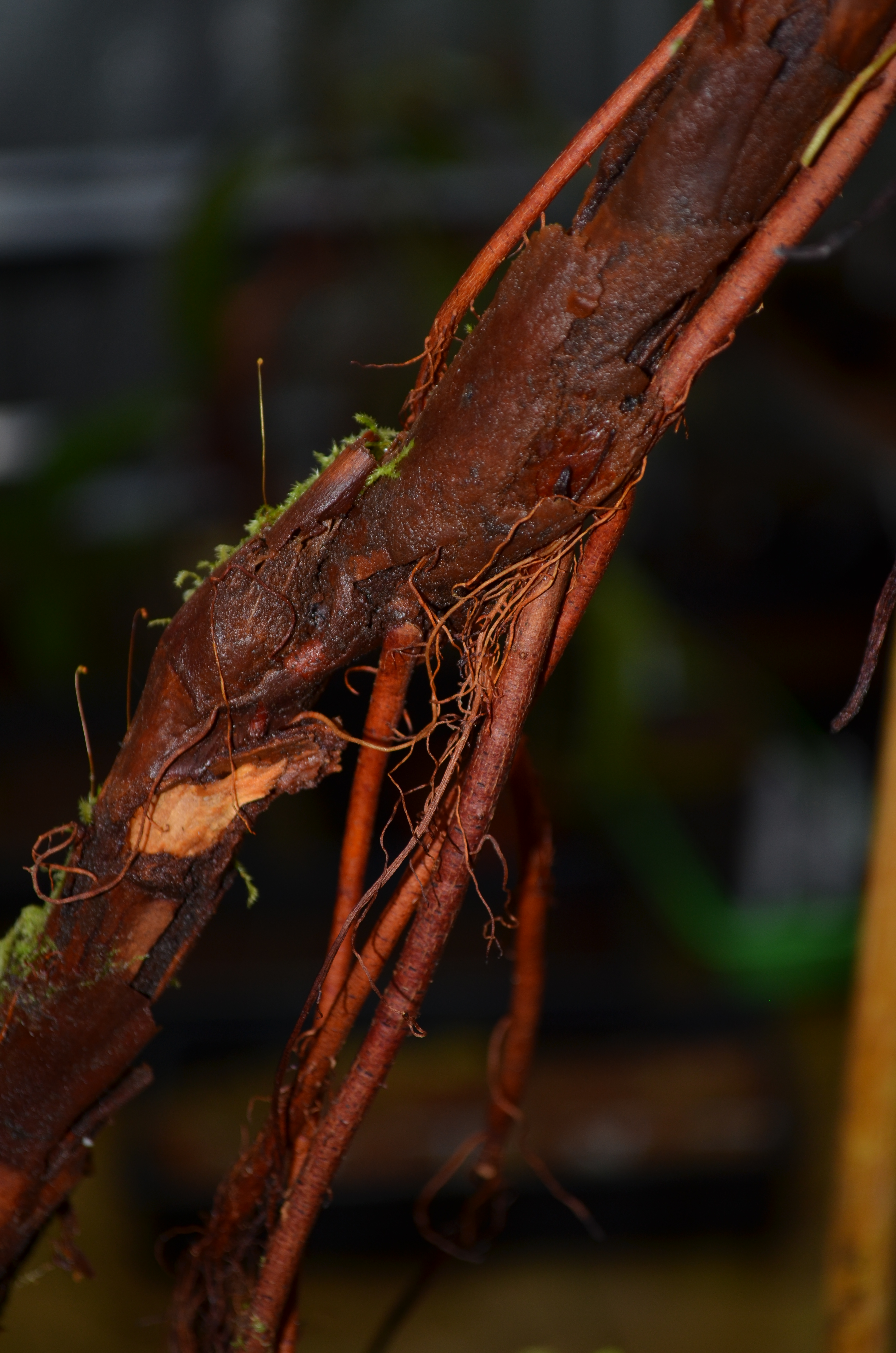
Giant Sun Pitcher
LCGiant Sun Pitcher is a shrubby carnivorous plant that grows on ancient cloud-shrouded tepui plateaus.

Triphyophyllum
VUTriphyophyllum is the world's largest carnivorous plant, growing into a massive 70-meter rainforest vine.

Australian Rainbow Plant
LCAustralian Rainbow Plant earns its name because sunlight shining through its sticky leaf droplets creates rainbows.