Bird of Paradise
Quick Facts & Botanical Stats
Species Overview
What is the Bird of Paradise? Strelitzia reginae, the bird of paradise or crane flower, is a large evergreen perennial plant in the Strelitziaceae family. Native to South Africa, it is famous for its unique, exotic flowers that look like a tropical bird in flight. It is highly popular in warm-climate landscaping and is the official flower of the city of Los Angeles.
Physical Appearance & Anatomy
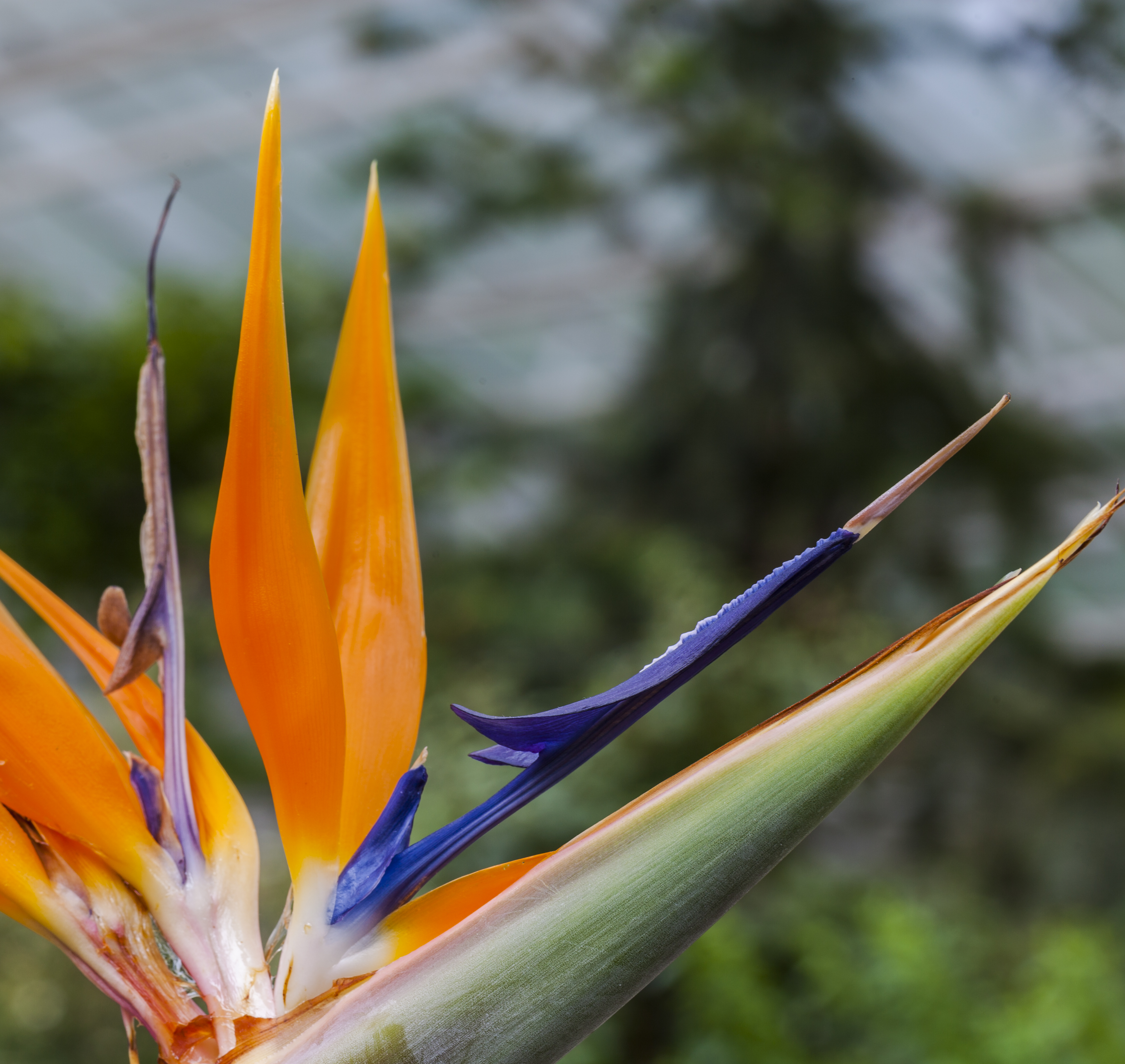
What does a bird of paradise look like? The plant grows from thick rhizomes, forming clumps of large, paddle-shaped leaves that resemble banana leaves. The leaves are thick, leathery, and blue-green with red midribs. How do bird of paradise flowers look? The flowers emerge from a horizontal, beak-like sheath (spathe) and consist of three bright orange sepals and three vivid blue petals, looking like a bird's crest.
Habitat & Growth Behavior
Where do bird of paradise plants grow? They grow in sunny coastal valleys, savannah margins, and along riverbanks. They require full sun, mild temperatures, and fertile, well-drained soils. The plant is drought-tolerant once established, using its thick, fleshy roots to store water and nutrients. It cannot tolerate freezing temperatures, entering dormancy if temperatures drop below 10°C.
Ecological Role & Symbioses
What pollinates the bird of paradise? The flowers are uniquely pollinated by sunbirds (Nectarinia). How does bird pollination work? When a sunbird lands on the blue petals to drink nectar, the petals open under the bird's weight, dusting its feet and breast with pollen. As the bird visits other flowers, it transfers the pollen. The dense leaf clumps provide nesting shelter for frogs and lizards.
Reproduction, Lifecycle & Propagation
How do bird of paradise plants reproduce? They reproduce sexually. Fertilized flowers produce woody capsules containing black seeds wrapped in bright orange, fuzzy tufts (arils) that attract seed-dispersing birds. They also propagate vegetatively by dividing mature root clumps. The plant grows slowly, taking 3 to 5 years to bloom, but is very long-lived, surviving for over a century.
Conservation Status & Environmental Threats
Strelitzia reginae is classified as Least Concern on the IUCN Red List. It is cultivated in tropical and subtropical regions worldwide. Wild populations in South Africa are stable, though urban development and agriculture have encroached on some coastal habitats. Seed harvesting is regulated to protect wild populations.
Interesting Fun Facts
- The flowers look exactly like the head of a colorful tropical bird (a crane), which serves as a specialized landing pad for sunbird pollinators.
- The seeds are black with bright orange, fuzzy tufts called arils, which birds eat to help disperse the seeds.
- It is the official flower of Los Angeles, California, where it is planted extensively in public parks.
- A single flower structure can produce a succession of blooms from its beak-like spathe over several weeks.
Related Plants

Chinese Hibiscus
Least ConcernWhat is a hibiscus? The Chinese hibiscus (Hibiscus rosa-sinensis) is a tropical evergreen shrub belonging to the Malvaceae family. Famous for its massive, funnel-shaped flowers and bright red petals, it is a classic symbol of tropical beauty and is the national flower of Malaysia. The flowers are edible and widely used to make tart, vitamin-rich herbal teas and traditional remedies.

Moth Orchid
Least ConcernWhat is a moth orchid? The moth orchid (Phalaenopsis amabilis) is an epiphytic perennial plant belonging to the Orchidaceae family, one of the two largest families of flowering plants. Native to the warm, humid rainforests of Southeast Asia, it grows attached to the bark of trees rather than in soil. Known for its elegant, long-lasting flowers that resemble moths in flight, it is highly popular as an indoor houseplant and is a national flower of Indonesia.