
Paper Flower
Quick Facts & Botanical Stats
Species Overview
What is bougainvillea? Bougainvillea spectabilis is a thorny, woody climbing vine belonging to the Nyctaginaceae family. Native to Brazil, it is globally famous for its spectacular cascades of vibrant, paper-like colors. The actual flowers are tiny and white; the famous colorful 'petals' are actually modified leaves called bracts that surround the flowers to attract pollinators.
Physical Appearance & Anatomy
What does bougainvillea look like? The plant grows as a scrambling vine or dense shrub, armed with sharp, curved thorns that help it climb. The leaves are green, oval, and alternate. How do bougainvillea flowers look? The flowers are small, tubular, cream-colored, and grow in groups of three. Each group is surrounded by three large, papery, brightly colored bracts in shades of magenta, purple, red, pink, yellow, or orange.
Habitat & Growth Behavior
Where do bougainvilleas grow? They thrive in warm, sunny, arid and semi-arid climates with well-drained, sandy soils. They are drought-tolerant and bloom most abundantly when they experience dry stress. They cannot tolerate freezing temperatures. In wet climates, they produce green leaves but few flowers. They use their thorns to hook onto trees, cliffs, and walls to reach sunlight.
Ecological Role & Symbioses
What pollinators visit bougainvillea? The bright bracts attract hummingbirds, butterflies, and bees, which pollinate the tiny central flowers. Are bougainvilleas animal-resistant? Yes, the woody stems, sharp thorns, and mildly toxic sap deter grazing mammals like deer and goats, making them excellent protective boundary fences in warm regions.
Reproduction, Lifecycle & Propagation
How do bougainvilleas reproduce? Wild plants reproduce sexually via bird and butterfly pollination, producing small, ribbed seeds. Cultivated plants are propagated almost exclusively via hardwood or softwood cuttings taken in spring or summer. They grow rapidly, establishing woody trunks over several decades, and can live for 20 to 30 years.
Conservation Status & Environmental Threats
Bougainvillea spectabilis is classified as Least Concern on the IUCN Red List. It is cultivated in millions of warm-climate gardens globally. Wild populations in Brazil are stable, though coastal rainforest deforestation presents minor threats to local wild genotypes. They are susceptible to leaf-cutting ants and root rot if overwatered.
Interesting Fun Facts
- The bright colors of bougainvillea are not petals but modified, papery leaves called bracts; the true flowers are tiny and white.
- The plant was named after Louis Antoine de Bougainville, the French admiral who led a global expedition in the 1760s.
- Bougainvillea blooms best when root-bound and kept slightly dry, responding to stress by producing massive flower displays.
- In warm, frost-free climates, bougainvillea can bloom continuously year-round.
Related Plants

Chinese Hibiscus
Least ConcernWhat is a hibiscus? The Chinese hibiscus (Hibiscus rosa-sinensis) is a tropical evergreen shrub belonging to the Malvaceae family. Famous for its massive, funnel-shaped flowers and bright red petals, it is a classic symbol of tropical beauty and is the national flower of Malaysia. The flowers are edible and widely used to make tart, vitamin-rich herbal teas and traditional remedies.
Garden Rose
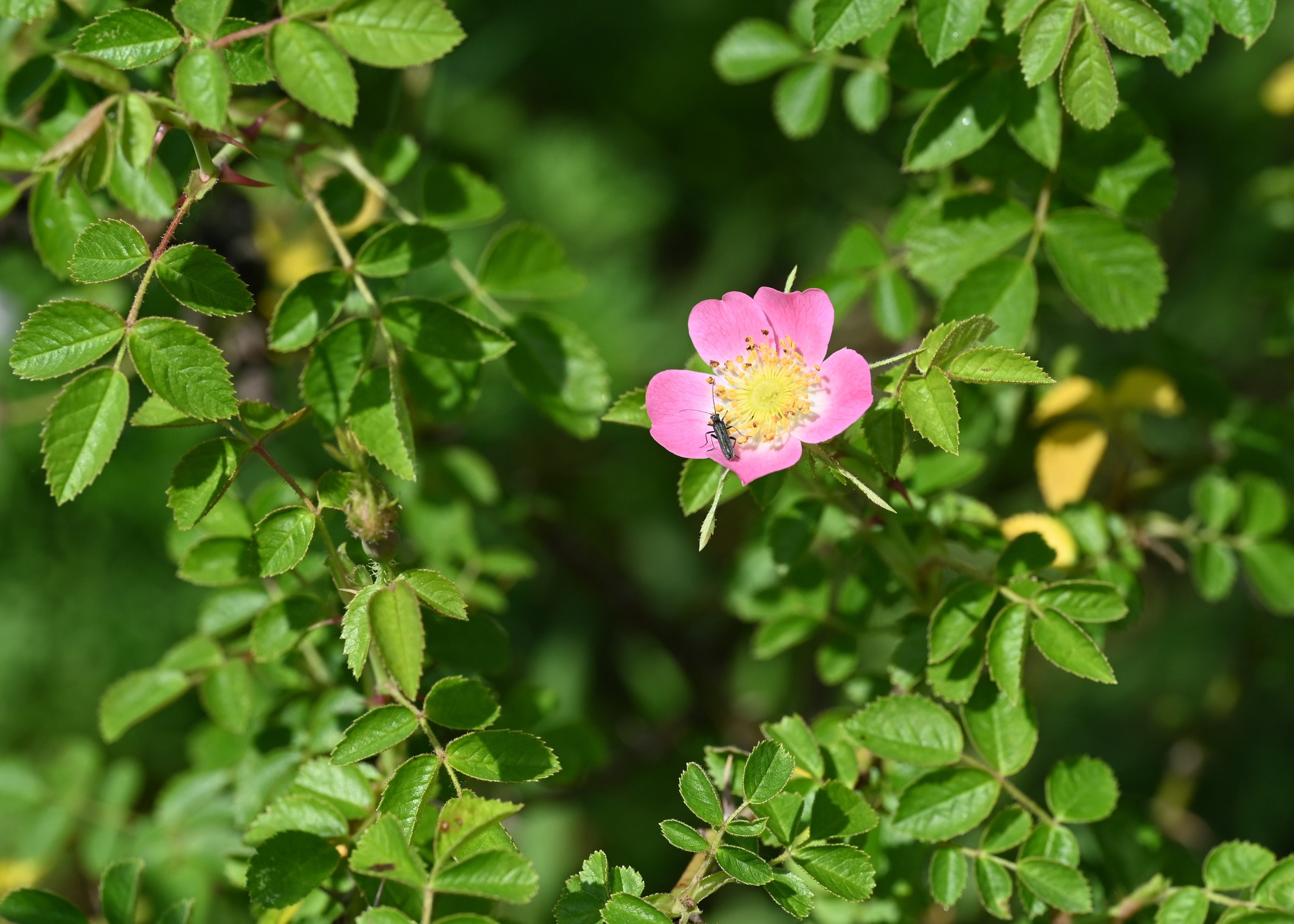
Least ConcernWhat is a rose? The rose (Rosa rubiginosa) is a woody perennial flowering plant belonging to the Rosaceae family. Renowned globally for its ornamental beauty, fragrant blooms, and cultural significance, the rose is one of the most widely cultivated flowers. Roses grow as erect shrubs, climbing vines, or trailing groundcovers, often armed with sharp thorns that serve as physical defenses. In addition to their aesthetic appeal, roses yield rose hips, which are rich in Vitamin C and used in teas, syrups, and skincare products.