
Wild Daffodil
Quick Facts & Botanical Stats
Species Overview
What is a daffodil? The wild daffodil (Narcissus pseudonarcissus) is a spring-flowering bulbous perennial in the Amaryllidaceae family. Famous for its bright yellow, trumpet-shaped flowers, it carpet-forests woodlands across Western Europe. Every part of the plant contains toxic alkaloids (lycorine) which protect it from pests and herbivores, making it highly resilient.
Physical Appearance & Anatomy
What does a daffodil look like? Daffodils produce several erect, strap-like, flat green leaves that grow from an underground bulb. How do daffodil flowers look? The flower grows singly on a hollow, compressed stem. It features six pale yellow petals (perianth) surrounding a central, darker yellow, bell-shaped trumpet (corona) containing six stamens and a single style.
Habitat & Growth Behavior
Where do wild daffodils grow? They thrive in damp, deciduous woodlands, moist meadows, and along river banks with acidic or neutral soils. Daffodils emerge early in spring, completing their blooming cycle under the sunlight before the deciduous forest canopy closes. The foliage remains active for several weeks to recharge the bulb, then dies back to the ground by mid-summer.
Ecological Role & Symbioses
What pollinators visit daffodils? The yellow trumpets attract early queen bumblebees, hoverflies, and butterflies, providing crucial early nectar. Are daffodils resistant to animals? Yes, because the bulbs and leaves are toxic, deer, rabbits, squirrels, and rodents avoid eating them. This toxicity allows daffodils to form massive, stable colonies in areas with high herbivore populations.
Reproduction, Lifecycle & Propagation
How do daffodils reproduce? They reproduce sexually by seeds dispersed by gravity and rain. They also reproduce vegetatively by division, where the parent bulb splits to form offsets that gradually separate. Over years, a single bulb can multiply into a dense clump. Daffodil bulbs are incredibly long-lived, remaining viable in the soil for decades.
Conservation Status & Environmental Threats
Narcissus pseudonarcissus is classified as Least Concern. Wild populations are stable, though historical collections and woodland habitat loss have reduced them in parts of Europe. Modern threats include hybridization with cultivated garden varieties and competitive choking by invasive plants like ivy. They are highly protected in European nature reserves.
Interesting Fun Facts
- Daffodils contain a toxic chemical called lycorine, which makes them immune to being eaten by deer, rabbits, and pocket gophers.
- The daffodil is the national symbol of Wales, worn on St. David's Day.
- The genus name Narcissus comes from Greek mythology, named after the youth who fell in love with his own reflection.
- Daffodils are traditional symbols of hope, renewal, and the arrival of spring.
Related Plants

Garden Tulip
Least ConcernWhat is a tulip? The garden tulip (Tulipa gesneriana) is a spring-blooming herbaceous perennial plant arising from underground bulbs, belonging to the Liliaceae family. Native to Central Asia and popularized in Turkey, it became the subject of 'Tulip Mania' in 17th-century Holland. Today, it is one of the most popular ornamental flowers in the world, with thousands of registered cultivars.
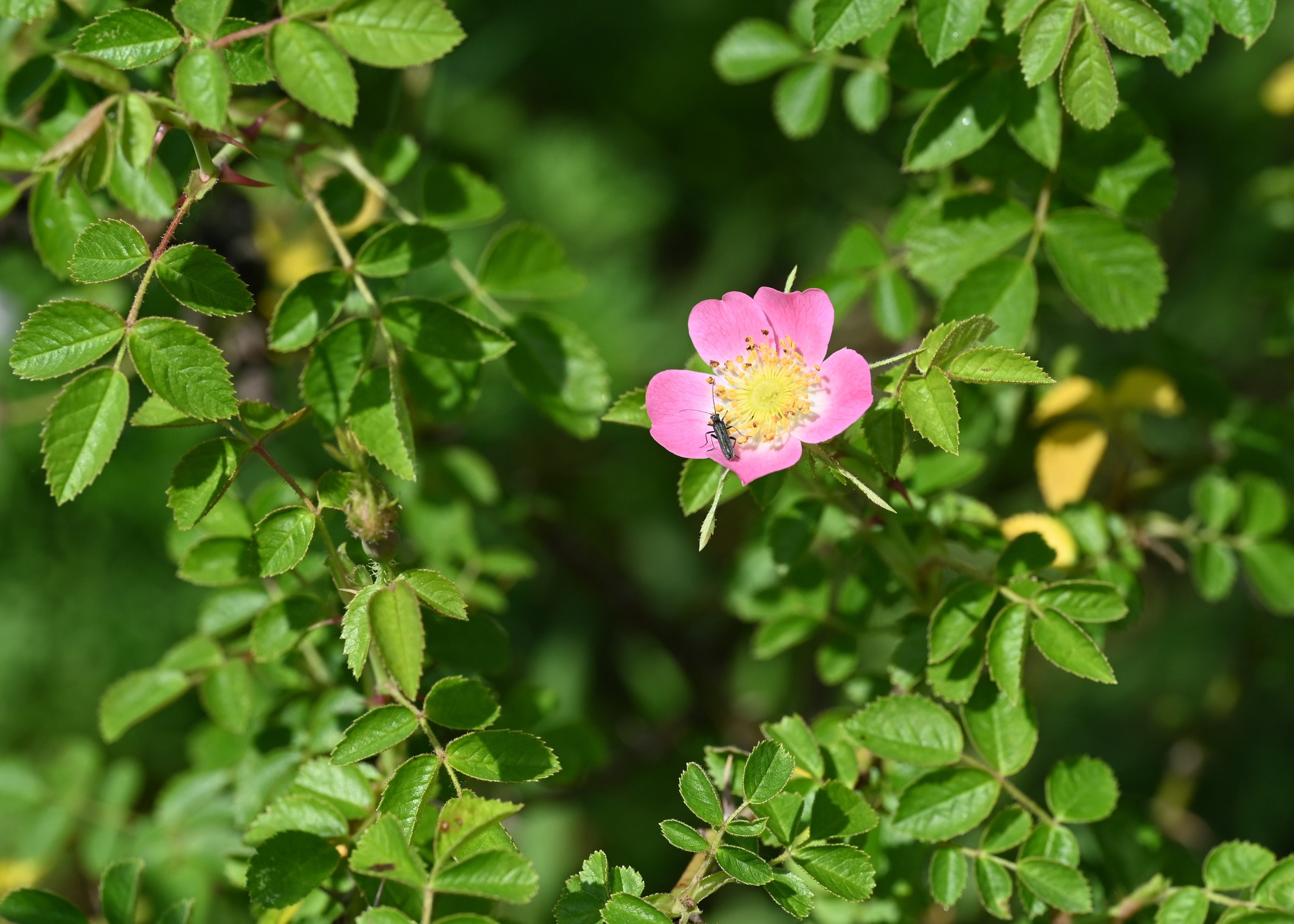
Garden Rose
Least ConcernWhat is a rose? The rose (Rosa rubiginosa) is a woody perennial flowering plant belonging to the Rosaceae family. Renowned globally for its ornamental beauty, fragrant blooms, and cultural significance, the rose is one of the most widely cultivated flowers. Roses grow as erect shrubs, climbing vines, or trailing groundcovers, often armed with sharp thorns that serve as physical defenses. In addition to their aesthetic appeal, roses yield rose hips, which are rich in Vitamin C and used in teas, syrups, and skincare products.