
French Hydrangea
Quick Facts & Botanical Stats
Species Overview
What is a hydrangea? The French hydrangea (Hydrangea macrophylla) is a deciduous woody shrub in the Hydrangeaceae family. Native to Japan, it is globally famous for its massive, globe-shaped flower heads. It is famous for a unique chemical trait: the color of its flowers changes dynamically based on the acidity (pH) and aluminum content of the soil in which it grows.
Physical Appearance & Anatomy
What does a hydrangea look like? The shrub has a rounded form with multiple stems. Its leaves are large, thick, oval, and bright green with serrated edges. How do hydrangea flowers look? The flower heads are large corymbs, either mophead (spherical clusters of sterile flowers) or lacecap (flat clusters with fertile flowers inside). The flowers are blue in acidic soils, pink in alkaline soils, and white or cream in neutral soils.
Habitat & Growth Behavior
Where do hydrangeas grow? They grow in moist valleys, coastal slopes, and woodland margins. They prefer morning sun, afternoon shade, and rich, organic, consistently moist soils. Hydrangeas have high water requirements, and their leaves wilt quickly in midday heat to conserve moisture, recovering when temperatures drop. They enter winter dormancy, shedding leaves, and grow rapidly in spring.
Ecological Role & Symbioses
What pollinators visit hydrangeas? Lacecap hydrangeas have fertile flowers that attract hoverflies, solitary bees, and bumblebees. Mopheads are mostly sterile and provide little pollen, serving primarily as shelter for small garden insects. Do animals eat hydrangeas? The leaves contain cyanogenic glycosides, making them toxic if eaten in large quantities, which deters deer and rabbits.
Reproduction, Lifecycle & Propagation
How do hydrangeas reproduce? Fertile flowers produce tiny seeds in capsules that are dispersed by wind. Asexually, they propagate easily via softwood cuttings in summer, or layering, where low-hanging branches touch the soil, grow roots, and form new shrubs. Hydrangeas grow moderately fast and can live for 15 to 30 years with proper pruning and water.
Conservation Status & Environmental Threats
Hydrangea macrophylla is classified as Least Concern due to widespread global cultivation. Wild populations in coastal Japan are stable, facing minor threats from urbanization and habitat clearing. Cultivated plants are susceptible to fungal diseases like leaf spot and powdery mildew if watered overhead, and require protective mulching in freezing climates.
Interesting Fun Facts
- The color of hydrangea flowers is a natural pH indicator; they turn blue in acidic soil (pH below 5.5) and pink in alkaline soil (pH above 6.5).
- The change in color is caused by the absorption of aluminum, which is more soluble in acidic soils.
- The name hydrangea comes from Greek words meaning 'water vessel', referring to the plant's high water requirements and cup-shaped seed capsules.
- Hydrangeas contain compounds that make them toxic to pets and humans if ingested.
Related Plants
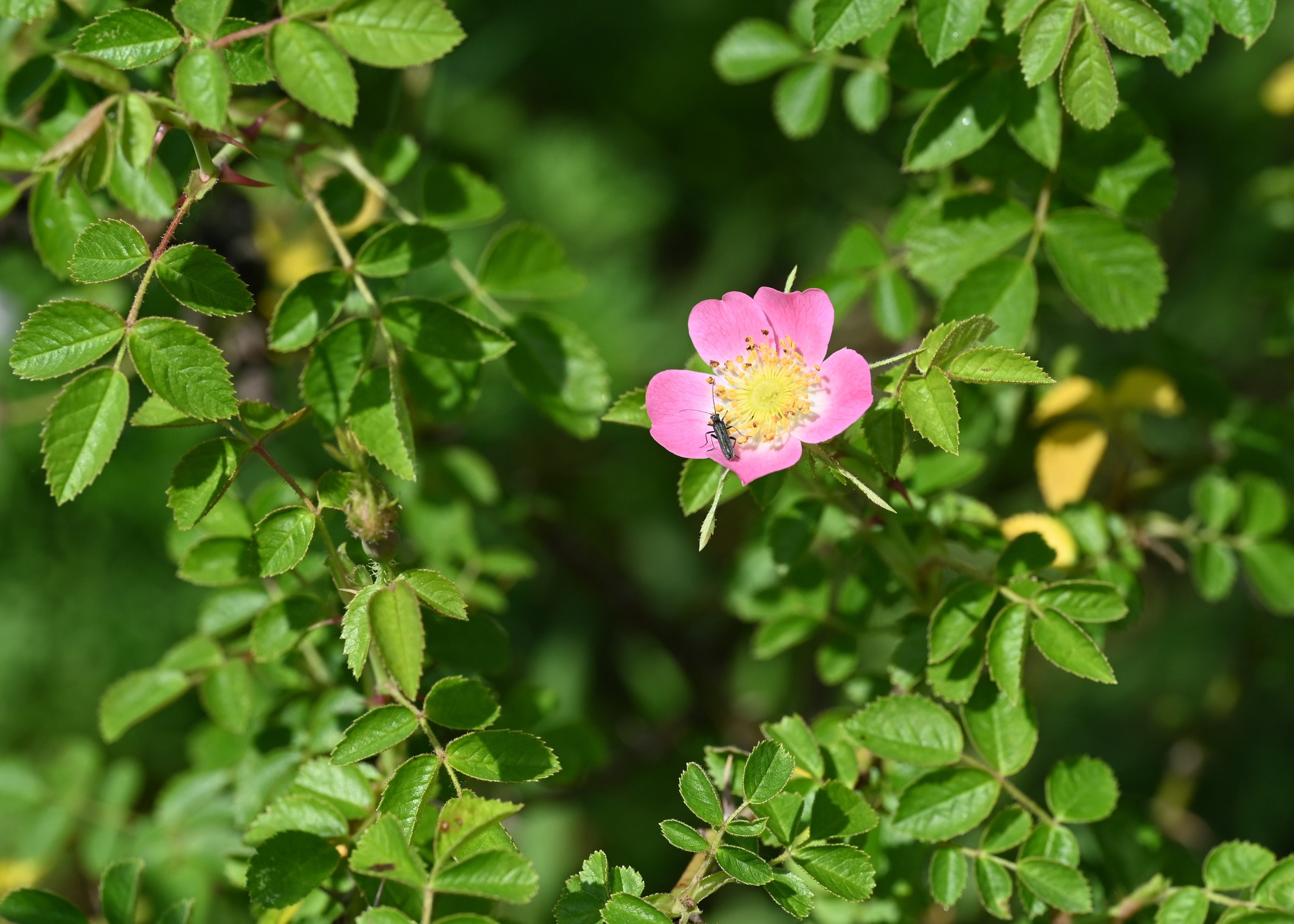
Garden Rose
Least ConcernWhat is a rose? The rose (Rosa rubiginosa) is a woody perennial flowering plant belonging to the Rosaceae family. Renowned globally for its ornamental beauty, fragrant blooms, and cultural significance, the rose is one of the most widely cultivated flowers. Roses grow as erect shrubs, climbing vines, or trailing groundcovers, often armed with sharp thorns that serve as physical defenses. In addition to their aesthetic appeal, roses yield rose hips, which are rich in Vitamin C and used in teas, syrups, and skincare products.

Boston Fern
Least ConcernWhat is a Boston fern? The Boston fern (Nephrolepis exaltata 'Bostoniensis') is a popular species of fern belonging to the Lomariopsidaceae family. Native to humid, tropical woodlands and swamps, it is globally famous for its lush, arching, feathery fronds. Discovered in a shipment of ferns from Boston to Philadelphia in 1894, it became a classic Victorian houseplant. Like all ferns, it is a non-flowering vascular plant that reproduces via spores rather than seeds.