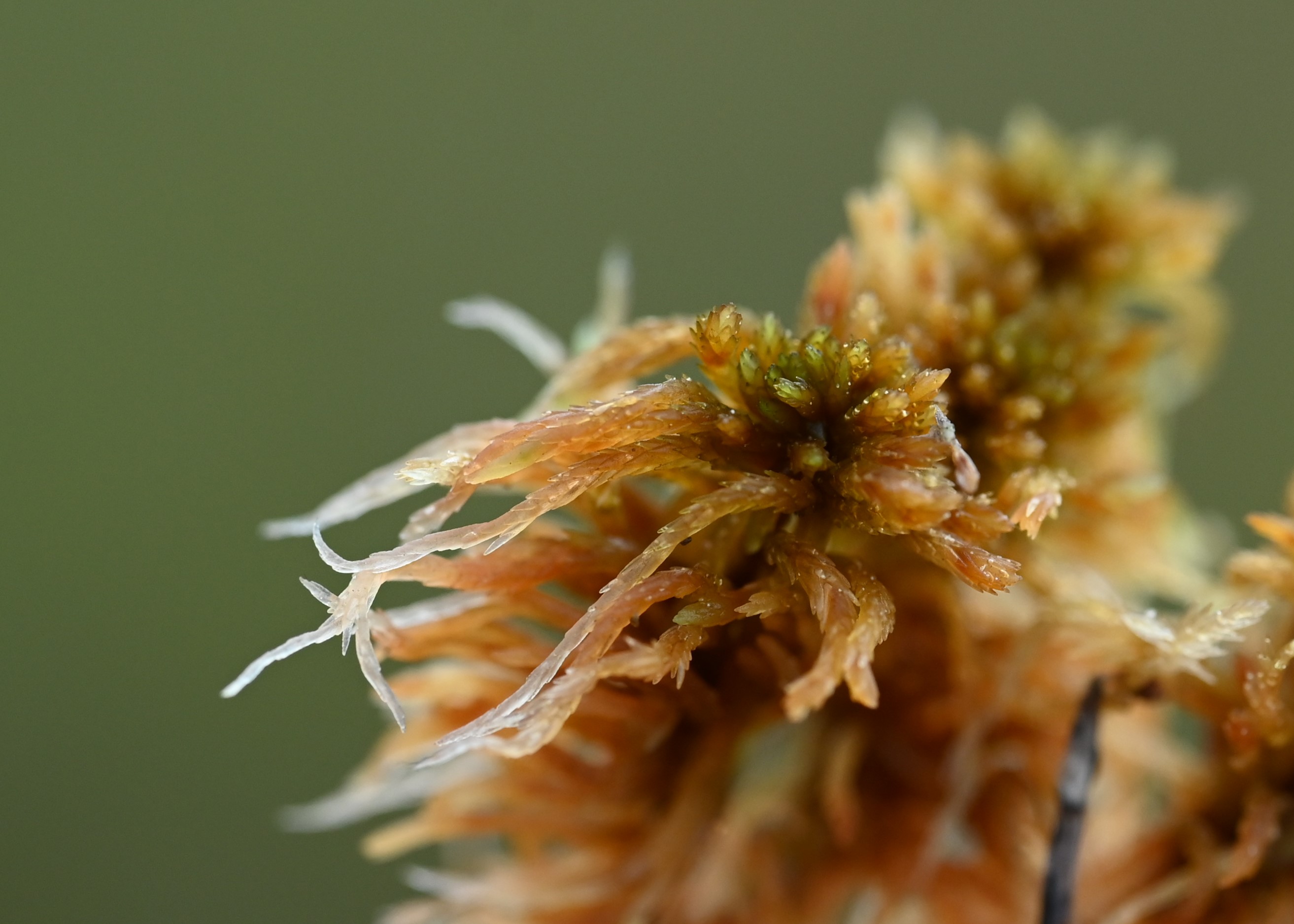
Brown Peat Moss
Quick Facts & Botanical Stats
Species Overview
Brown Peat Moss is a key tundra species that builds deep, hummocky peat bogs in subarctic zones.
Physical Appearance & Anatomy
Tight rusty-brown to copper-colored hummocks of thread-like stems and capitate heads.
Habitat & Growth Behavior
Grows in elevated dry hummocks above cold arctic bog water levels.
Ecological Role & Symbioses
Major global carbon sink; locks vast amounts of carbon in un-decayed peat layers.
Reproduction, Lifecycle & Propagation
Builds perpetual layers of peat as lower tissue dies while upper tips grow.
Conservation Status & Environmental Threats
Vulnerable to arctic permafrost thawing and peat extraction.
Interesting Fun Facts
- Global peatlands built by Sphagnum mosses store more carbon than all the world's forests combined.
- Its acidic, oxygen-poor bog environment preserves ancient artifacts and 'bog bodies' for thousands of years.
Related Plants

Sphagnum Moss
Least ConcernWhat is Sphagnum Moss? Sphagnum is a genus of approximately 380 species of mosses, commonly known as peat moss. Why is Sphagnum moss important? It is a critical ecosystem engineer that dominates peat bogs, wet tundras, and boreal forests. Sphagnum moss can store massive amounts of water—up to 20 times its dry weight—within its specialized cells. Over thousands of years, the slow decay of this moss in waterlogged conditions forms peat, which stores more carbon than all the world's tropical rainforests combined.

Common Haircap Moss
Least ConcernWhat is haircap moss? Common haircap moss (Polytrichum commune) is a large, non-vascular bryophyte in the Polytrichaceae family. Widespread globally, it is one of the tallest mosses in the world. Unlike most mosses, it has a primitive water-conducting system (hydroids) that allows it to grow much taller than other species. It gets its name from the hairy cap that covers the developing spore capsules.