Prickly Pear
Quick Facts & Botanical Stats
Species Overview
What is a Prickly Pear? The prickly pear (Opuntia ficus-indica), or nopal, is a large, shrubby cactus in the Cactaceae family. Native to Mexico, it has been cultivated for thousands of years for its edible pads (nopales) and sweet fruit (tunas). It is famous for its flattened, paddle-like stem segments. It has naturalized globally, becoming invasive in some arid regions of Australia and Africa.
Physical Appearance & Anatomy
What does a prickly pear look like? The cactus grows as a large, branching shrub with a woody trunk. How do its stems grow? The stems are composed of flat, fleshy, oval, paddle-like segments (cladodes) that function as leaves. The paddles are covered in areoles that produce small, sharp spines and bundles of tiny, barbed bristles called glochids. In summer, it produces bright yellow, orange, or red flowers.
Habitat & Growth Behavior
Where do prickly pears grow? They grow in dry, sandy, gravelly soils in deserts and scrublands, requiring full sun. How do they adapt? They store water in their thick paddles and use CAM photosynthesis. Their seeds can survive long droughts in the soil. The pads can root quickly if they fall off and touch the soil, allowing the plant to spread vegetatively.
Ecological Role & Symbioses
What animals eat prickly pear? The sweet, juicy fruits (tunas) are a vital food source for desert birds, coyotes, iguanas, and tortoises. What is it host to? It is the primary host plant for the cochineal insect, which is harvested to make a natural red dye. In areas where it is invasive, it forms dense, impassable thickets that crowd out native flora.
Reproduction, Lifecycle & Propagation
Prickly pears reproduce sexually via insect pollination, producing round, seed-filled red fruits. They also propagate vegetatively. Any pad that breaks off and falls to the ground will sprout roots and grow into a new plant. They grow rapidly, establishing large shrubs in 5 to 10 years, and can live for 20 to 50 years.
Conservation Status & Environmental Threats
Opuntia ficus-indica is classified as Least Concern on the IUCN Red List. It is cultivated as an agricultural crop globally. Wild populations in Mexico are stable. In Australia, it became a major invasive weed, covering 100,000 square miles of agricultural land in the 1920s before being controlled biologically using the Cactoblastis moth.
Interesting Fun Facts
- Prickly pear paddles (nopales) and fruits (tunas) are staple ingredients in Mexican cuisine, eaten grilled, boiled, or raw.
- The cactus is featured on the National Emblem of Mexico, depicting an eagle perched on a prickly pear devouring a snake.
- They produce tiny, hair-like, barbed thorns called glochids, which easily stick to skin and are difficult to remove.
- In the 1920s, Australia used the Cactoblastis cactorum moth larvae to biologically control an invasive infestation of prickly pear.
Related Plants

Saguaro Cactus
Least ConcernWhat is a Saguaro Cactus? Carnegiea gigantea, the saguaro, is a massive, tree-like cactus species belonging to the Cactaceae family. It is the iconic symbol of the American Southwest and is native exclusively to the Sonoran Desert. Growing slowly over two centuries, the saguaro develops a thick, ribbed trunk and characteristic branching arms. Saguaros are keystone species in their desert ecosystem, providing nesting sites, moisture, and food for dozens of desert animals.
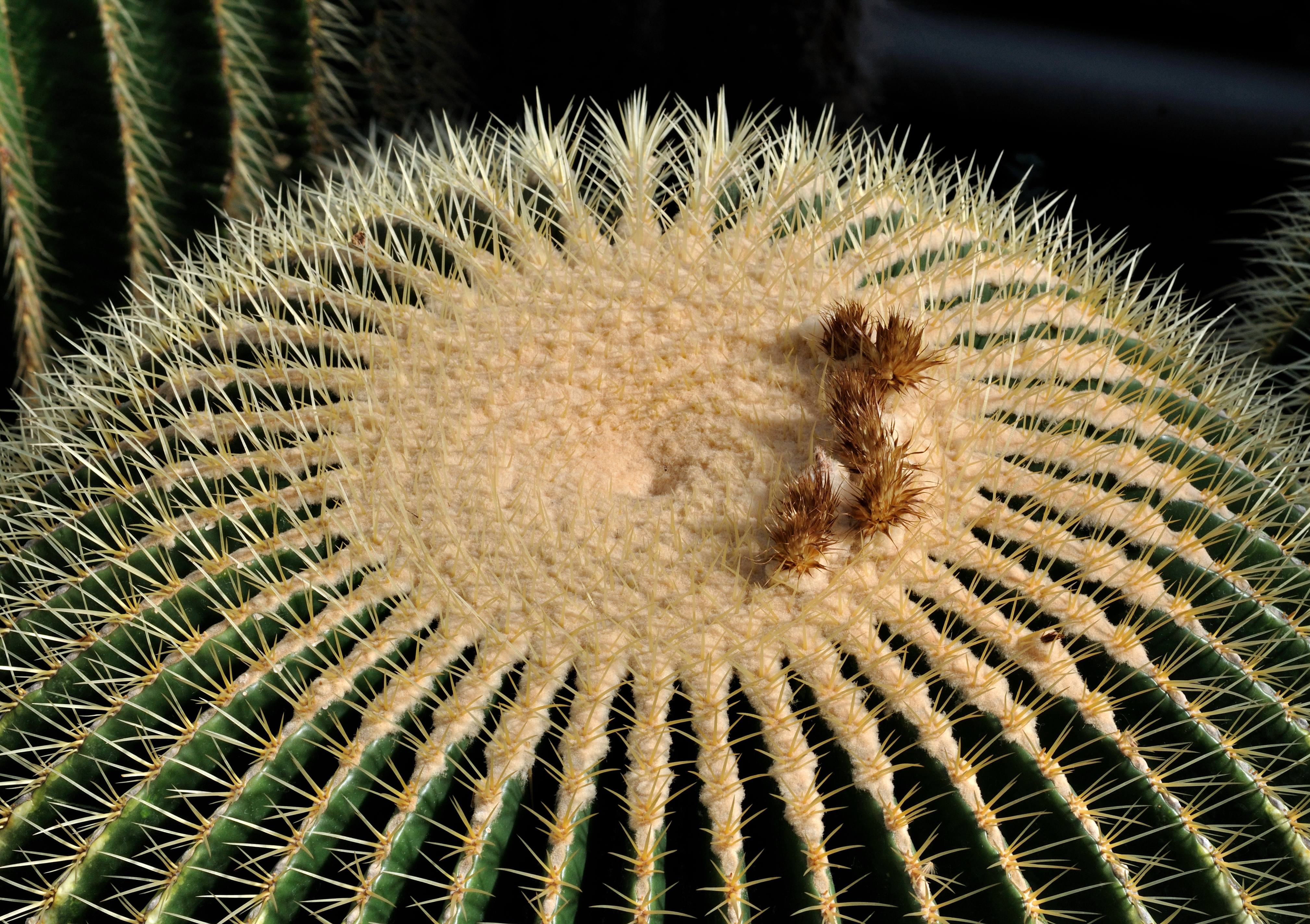
Golden Barrel Cactus
EndangeredWhat is the Golden Barrel Cactus? The golden barrel cactus (Echinocactus grusonii), or mother-in-law's cushion, is a globular cactus in the Cactaceae family. Native to the deserts of Central Mexico, it is famous for its spherical shape and dense covering of bright yellow spines. Is it endangered? Yes, while it is one of the most popular cultivated cacti globally, it is critically endangered in the wild due to habitat flooding from dam construction.