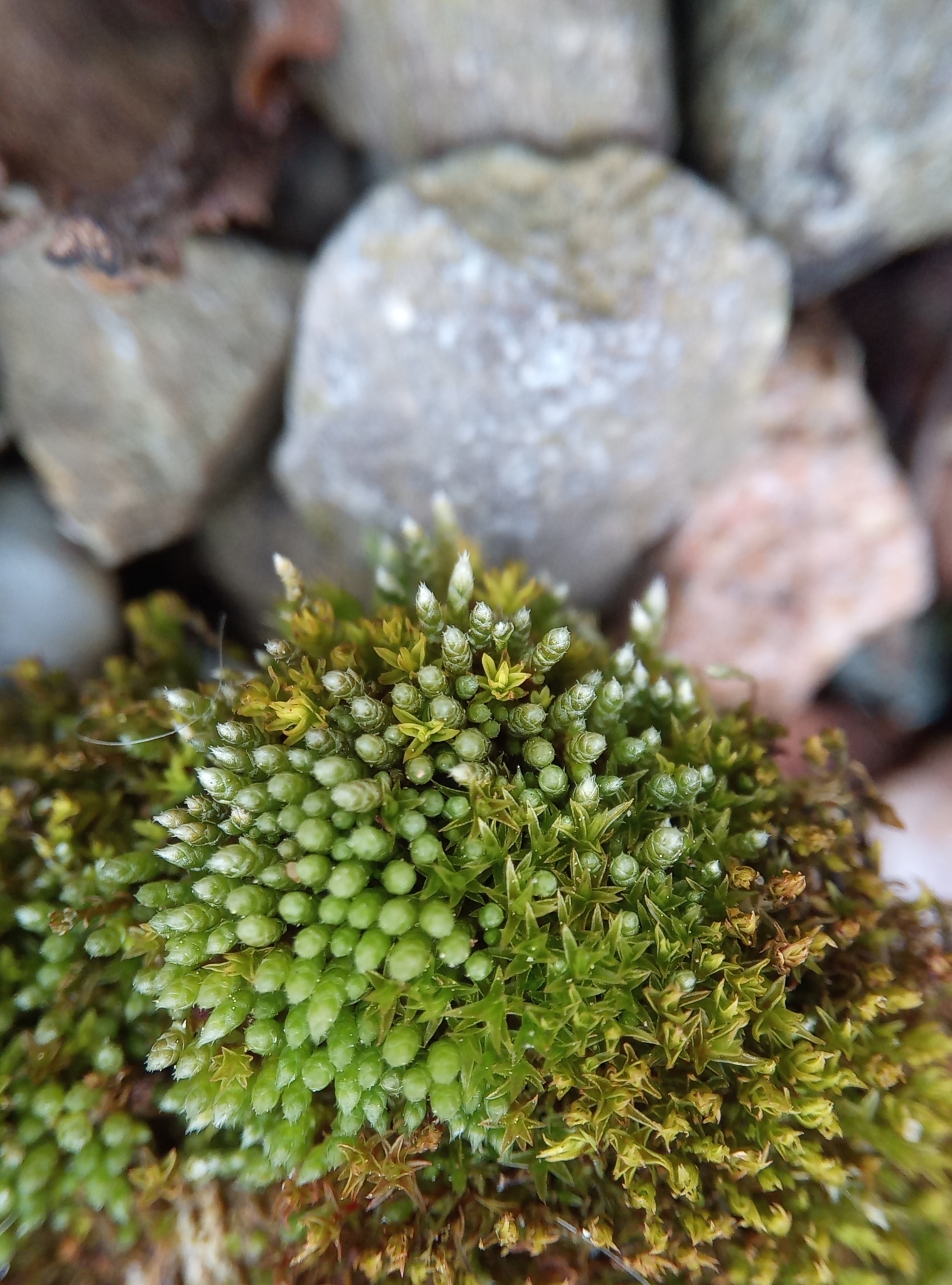
Silver Moss
Quick Facts & Botanical Stats
Species Overview
What is Silver Moss? Silver moss (Bryum argenteum), or silvery thread moss, is a small non-vascular bryophyte in the Bryaceae family. It is one of the most widely distributed plants on Earth, found on every continent, including the cold deserts of Antarctica and hot city streets. It is famous for its shimmering, silvery-green color, which is an adaptation to reflect harsh sunlight.
Physical Appearance & Anatomy
What does silver moss look like? The moss grows in tiny, dense, compact cushions. The stems are short, tightly packed, and covered in overlapping, scale-like leaves. Why is it silvery? The upper half of each tiny leaf lacks chlorophyll and is transparent; when dry, these clear cells reflect light, giving the moss its characteristic silvery-white or grey shimmer. It produces small, nodding, egg-shaped green-to-red capsules.
Habitat & Growth Behavior
Where does silver moss grow? It grows in dry rocky soils, concrete cracks, brick pathways, and desert biocrusts. How does it survive drought? It is highly desiccation-tolerant: it can dry out completely, entering a suspended state of animation, and resume active photosynthesis within minutes of receiving water. The tight cushion shape reduces wind evaporation, and the clear leaf tips reflect heat.
Ecological Role & Symbioses
What is the ecological role of silver moss? In deserts, it is a key component of biological soil crusts, binding loose sand, fixing carbon, and preventing wind erosion. In urban ecosystems, it colonizes pavement cracks, absorbing heavy metals from runoff. Are they eaten? They are not eaten by animals, but provide moisture and shelter for microscopic tardigrades and mites.
Reproduction, Lifecycle & Propagation
Silver moss reproduces sexually via swimming sperm in water drops, producing nodding capsules that release spores. Asexually, it propagates extensively by producing tiny, bulb-like structures (bulbils) in the leaf axils, which break off and are dispersed by rain splashing. It also regenerates from tiny leaf fragments blown by the wind, allowing it to colonize urban areas rapidly.
Conservation Status & Environmental Threats
Bryum argenteum is classified as Least Concern on the IUCN Red List. It is extremely abundant globally. It faces no threats of extinction, thriving in human-disturbed habitats and pavements. It is highly resistant to air pollution, road salt, and heavy foot traffic, making it one of the most successful urban plants.
Interesting Fun Facts
- Silver moss grows on every continent, including Antarctica, where it survives freezing temperatures down to -60°C.
- The silvery sheen is a survival trick; the leaf tips are transparent and act like tiny mirrors to reflect harsh sunlight and heat.
- The plant can survive being dried out completely for years, turning green and active within minutes of being watered.
- It is a common 'weed' in city sidewalk cracks, highly resistant to air pollution, road salt, and stepping feet.
Related Plants

Sphagnum Moss
Least ConcernWhat is Sphagnum Moss? Sphagnum is a genus of approximately 380 species of mosses, commonly known as peat moss. Why is Sphagnum moss important? It is a critical ecosystem engineer that dominates peat bogs, wet tundras, and boreal forests. Sphagnum moss can store massive amounts of water—up to 20 times its dry weight—within its specialized cells. Over thousands of years, the slow decay of this moss in waterlogged conditions forms peat, which stores more carbon than all the world's tropical rainforests combined.

Saguaro Cactus
Least ConcernWhat is a Saguaro Cactus? Carnegiea gigantea, the saguaro, is a massive, tree-like cactus species belonging to the Cactaceae family. It is the iconic symbol of the American Southwest and is native exclusively to the Sonoran Desert. Growing slowly over two centuries, the saguaro develops a thick, ribbed trunk and characteristic branching arms. Saguaros are keystone species in their desert ecosystem, providing nesting sites, moisture, and food for dozens of desert animals.