Great Basin Bristlecone Pine
Quick Facts & Botanical Stats
Species Overview
What is a bristlecone pine? The Great Basin bristlecone pine (Pinus longaeva) is an extremely long-lived coniferous tree native to the high-altitude mountain ranges of the American Southwest. It is globally famous as the oldest known non-clonal living organism on Earth, with individual trees documented to be over 4,800 years old. Growing in harsh, wind-swept, alpine conditions where other plants cannot survive, these trees grow incredibly slowly, developing dense, resinous wood that resists decay.
Physical Appearance & Anatomy
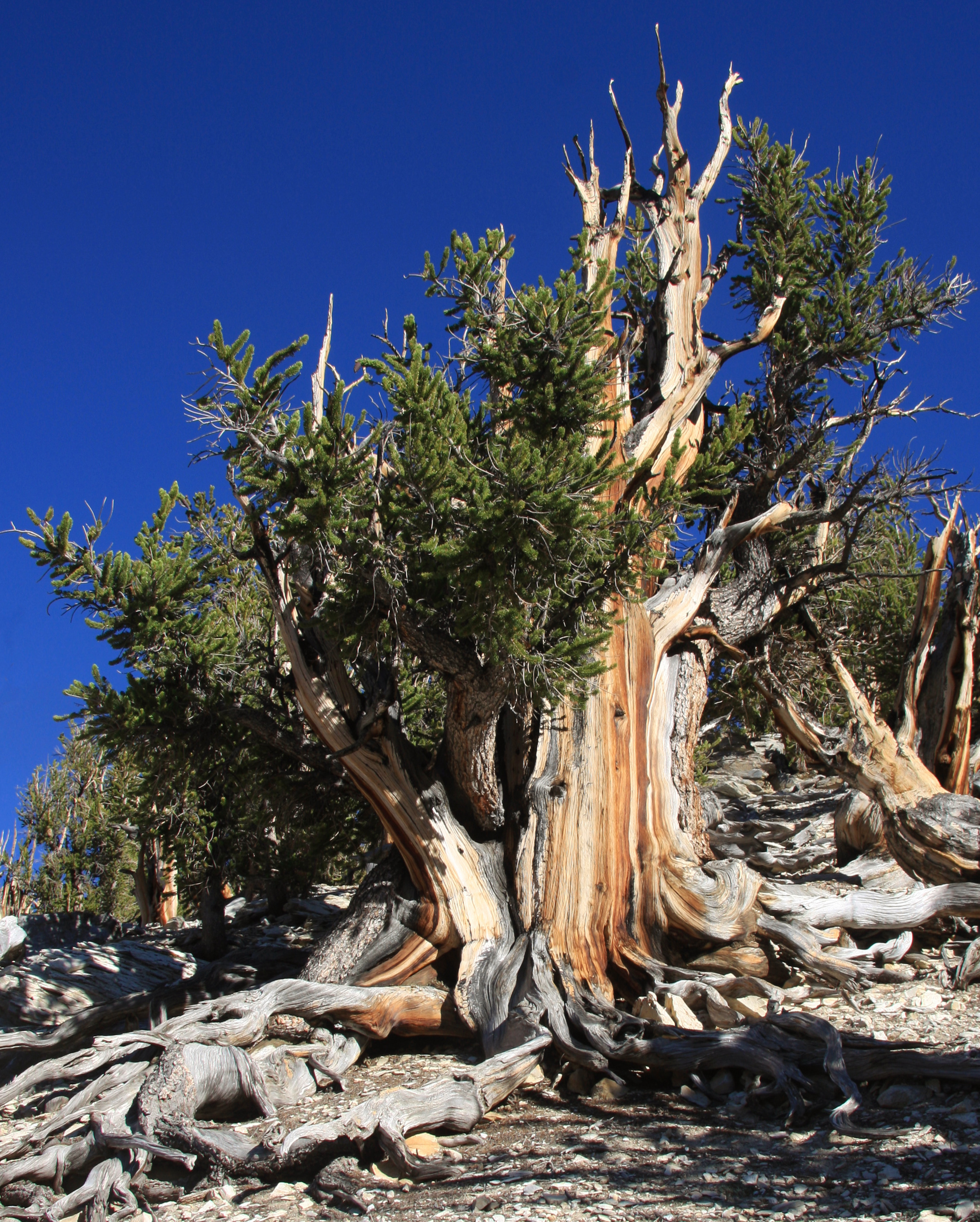
What does a bristlecone pine look like? Bristlecone pines are medium-sized, gnarled trees that grow to heights of 5 to 15 meters. As they age, wind, ice, and soil erosion sculpt their trunks into twisted, artistic shapes, leaving much of the trunk as polished, dead wood. The needles are dark green, grow in clusters of five, and can remain alive and active on the branches for up to 45 years. The cones are cylindrical, reddish-brown, and feature sharp bristles on their scales, from which the tree gets its name.
Habitat & Growth Behavior
Where do bristlecone pines grow? These pines grow at elevations between 2,700 and 3,400 meters (9,000 to 11,000 feet) on barren, rocky dolomite slopes. Dolomite is a type of limestone with low nutrient content, high alkalinity, and excellent water drainage, which prevents competition from other conifers. To survive the freezing temperatures, high winds, and arid climate, these trees grow extremely slowly, sometimes adding only a fraction of a millimeter to their trunk diameter annually.
Ecological Role & Symbioses
What is the ecological role of the bristlecone pine? Bristlecone pines act as pioneer species on rocky, high-altitude slopes, stabilizing soil and providing nesting sites for subalpine birds like the Clark's nutcracker. How are they used in climate science? Because of their extreme age and slow growth, their annual ring widths provide a highly detailed, continuous record of past climate conditions (dendroclimatology) dating back thousands of years.
Reproduction, Lifecycle & Propagation
Bristlecone pines reproduce sexually. They are monoecious, producing both male pollen cones and female seed cones on the same tree. Wind pollinates the female cones, which take two years to mature before releasing winged seeds. The seeds are dispersed by the wind and mountain birds. Bristlecone pines have an extraordinary lifespan, with the oldest tree, named 'Methuselah', estimated to be over 4,850 years old.
Conservation Status & Environmental Threats
Pinus longaeva is classified as Least Concern on the IUCN Red List. Their remote, high-altitude habitats protect them from logging and development. However, they are threatened by climate change, which allows faster-growing trees and invasive pests like the mountain pine beetle to climb to higher elevations, competing with the pines and introducing bark diseases.
Interesting Fun Facts
- Individual bristlecone pines can live for over 4,800 years, making them the oldest non-clonal living organisms on Earth.
- The wood of the bristlecone pine is so dense and resinous that it is virtually impervious to rot, fungi, and boring insects.
- Their needles can remain green and perform photosynthesis for up to 45 years before falling off.
- A tree can survive even if only a single narrow strip of bark and living tissue connects the roots to a few green branches.
Related Plants

Coast Redwood
EndangeredWhat is a Coast Redwood? Sequoia sempervirens, the coast redwood, is a massive coniferous evergreen tree belonging to the Cupressaceae family. It is the tallest living tree species on Earth, reaching heights of over 115 meters (377 feet). Restricted to a narrow coastal strip in California and Oregon, redwoods are ancient giants that can live for over 2,000 years. They form unique ecosystems characterized by thick bark, massive carbon storage, and a reliance on coastal fog.

Ginkgo Biloba
EndangeredWhat is a ginkgo tree? Ginkgo biloba, commonly known as the ginkgo or maidenhair tree, is an ancient deciduous tree and the sole surviving member of the division Ginkgophyta. Often referred to as a 'living fossil', the ginkgo has remained virtually unchanged for over 200 million years, predating the dinosaurs. While technically classified as a gymnosperm (like conifers), it features flat, fan-shaped leaves and has been cultivated in China for thousands of years for food, medicine, and temple landscaping.