
Coast Redwood
Quick Facts & Botanical Stats
Species Overview
What is a Coast Redwood? Sequoia sempervirens, the coast redwood, is a massive coniferous evergreen tree belonging to the Cupressaceae family. It is the tallest living tree species on Earth, reaching heights of over 115 meters (377 feet). Restricted to a narrow coastal strip in California and Oregon, redwoods are ancient giants that can live for over 2,000 years. They form unique ecosystems characterized by thick bark, massive carbon storage, and a reliance on coastal fog.
Physical Appearance & Anatomy
What does a coast redwood look like? The coast redwood features a tall, column-like trunk with reddish-brown, fibrous bark that can grow up to 30 cm (12 inches) thick. The leaves are needle-like, dark green on top with two white stomatal bands underneath, arranged flatly on lateral shoots. How big are redwood cones? Despite the tree's massive size, its seed cones are surprisingly small, measuring only 1.5 to 3 cm in length. The root system is shallow, spreading outward up to 30 meters to interlock with neighboring trees for wind stability.
Habitat & Growth Behavior
Where do coast redwoods grow? Coast redwoods grow in a humid coastal belt along the Pacific Coast of North America, where cool air and heavy summer fog prevail. Why is fog important to redwoods? The trees absorb moisture directly from the fog through their upper needles, allowing them to survive dry summers. The thick, fibrous bark contains high amounts of tannin, which protects the tree from wood-rotting fungi, boring insects, and forest fires. If damaged, redwoods can regenerate by sprouting clones from their base.
Ecological Role & Symbioses
What lives in redwood canopies? The complex canopy of old-growth redwoods, hundreds of feet in the air, accumulates soil and supports unique ecosystems of ferns, salamanders, lichens, and insects that never touch the forest floor. How do redwoods combat climate change? Redwood forests store more carbon per acre than any other forest ecosystem on Earth, playing a critical role in global carbon sequestration and climate mitigation.
Reproduction, Lifecycle & Propagation
Coast redwoods reproduce both sexually via wind-pollinated cones and asexually through vegetative cloning. The small cones release tiny seeds in autumn, which germinate in mineral-rich soils cleared by minor ground fires. Alternatively, when a redwood trunk is damaged or cut down, dormant buds at the base sprout rapidly to form a ring of clone trees around the parent stump. Redwoods grow rapidly and can live for 1,200 to 2,200 years.
Conservation Status & Environmental Threats
The coast redwood is listed as Endangered on the IUCN Red List. Historical commercial logging in the 19th and 20th centuries wiped out over 95% of the original old-growth redwood forests. Today, the remaining 5% of old-growth forests are highly protected in national and state parks. However, they face modern threats from rising temperatures and declining coastal fog caused by climate change, as well as urbanization.
Interesting Fun Facts
- The coast redwood is the tallest tree species on Earth; the tallest specimen, named Hyperion, stands at 115.92 meters (380 feet) tall.
- Redwood bark can grow up to 30 centimeters (12 inches) thick and contains tannins that make it highly resistant to pests, rot, and forest fires.
- Coast redwoods obtain up to 40% of their water supply from coastal fog absorbed directly through their needles.
- Despite their massive height, their root systems are only 2 to 3 meters deep, spreading horizontally and interlocking with other trees for support.
Related Plants
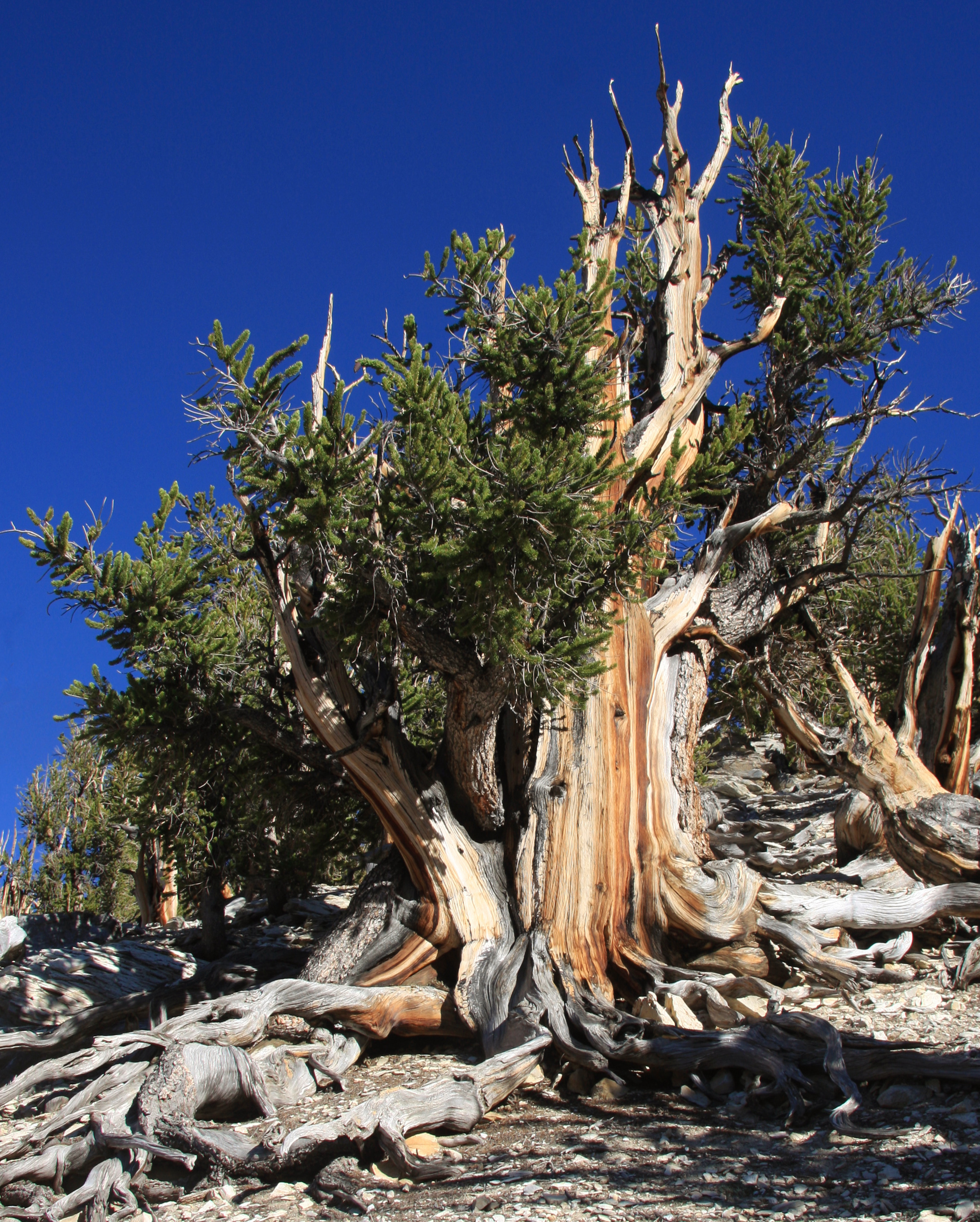
Great Basin Bristlecone Pine
Least ConcernWhat is a bristlecone pine? The Great Basin bristlecone pine (Pinus longaeva) is an extremely long-lived coniferous tree native to the high-altitude mountain ranges of the American Southwest. It is globally famous as the oldest known non-clonal living organism on Earth, with individual trees documented to be over 4,800 years old. Growing in harsh, wind-swept, alpine conditions where other plants cannot survive, these trees grow incredibly slowly, developing dense, resinous wood that resists decay.

Douglas Fir
Least ConcernWhat is a Douglas Fir? Pseudotsuga menziesii, the Douglas fir, is a massive coniferous evergreen tree belonging to the Pinaceae family. Native to western North America, it is one of the most commercially important timber trees globally. Despite its common name, it is not a true fir (genus Abies), but belongs to its own genus, Pseudotsuga (meaning 'false hemlock'). Douglas firs are key components of old-growth temperate rainforests, second in height only to coast redwoods.