
Ginkgo Biloba
Quick Facts & Botanical Stats
Species Overview
What is a ginkgo tree? Ginkgo biloba, commonly known as the ginkgo or maidenhair tree, is an ancient deciduous tree and the sole surviving member of the division Ginkgophyta. Often referred to as a 'living fossil', the ginkgo has remained virtually unchanged for over 200 million years, predating the dinosaurs. While technically classified as a gymnosperm (like conifers), it features flat, fan-shaped leaves and has been cultivated in China for thousands of years for food, medicine, and temple landscaping.
Physical Appearance & Anatomy
What does a ginkgo tree look like? The ginkgo is a large tree that grows to heights of 20 to 35 meters. It is easily recognized by its unique, fan-shaped leaves with a central notch, which resemble the pinnae of the maidenhair fern. The leaves are bright green in summer and turn a brilliant, uniform golden-yellow in autumn. Ginkgos are dioecious, meaning individual trees are either male or female. Female trees produce fleshy, plum-like seeds that emit a strong, unpleasant odor when they fall and decay in autumn.
Habitat & Growth Behavior
Where do ginkgo trees grow? While widely planted globally in cities, wild ginkgos are restricted to a few mountain reserves in Zhejiang province, China, where they grow in temperate valleys with rich, moist soils. Ginkgo trees are incredibly resilient: they tolerate air pollution, road salt, drought, and pests, making them highly popular urban street trees. They also possess an extraordinary ability to survive physical damage, as demonstrated by ginkgos that survived the atomic blast in Hiroshima.
Ecological Role & Symbioses
What is the ecological value of ginkgos? In their native valleys, ginkgo trees provide nesting sites for birds and support diverse insect populations. Why are they planted in cities? Their high tolerance for urban stress helps mitigate urban heat island effects and filter air pollution. The nuts (seeds) inside the smelly outer coat of female trees are harvested and eaten in Asian cuisines, and leaf extracts are used in traditional medicine.
Reproduction, Lifecycle & Propagation
Ginkgo trees reproduce sexually. Male trees produce pollen cones, and wind carries the pollen to the ovules of female trees in spring. The female seeds develop a soft, fleshy outer layer (sarcotesta) that mimics a fruit but is botanically a naked seed. After falling to the ground, the seeds are dispersed by small mammals. Ginkgos grow slowly but are exceptionally long-lived, with some temple specimens in China estimated to be over 3,000 years old.
Conservation Status & Environmental Threats
Ginkgo biloba is listed as Endangered on the IUCN Red List. Although millions of ginkgos are cultivated worldwide, wild populations are extremely small, isolated, and suffer from low genetic diversity, making them vulnerable to extinction in the wild. Wild trees are protected in Chinese nature reserves. In urban settings, male clones are preferred to avoid the smelly seeds of female trees.
Interesting Fun Facts
- The ginkgo is a 'living fossil', with fossil records showing it has existed virtually unchanged for over 270 million years.
- Ginkgo trees are dioecious, and the fallen seeds of female trees contain butyric acid, giving them a smell similar to rancid butter.
- Six ginkgo trees growing near the 1945 Hiroshima atomic bomb blast survived the explosion and are still alive today.
- In autumn, ginkgo trees often shed all their leaves in a single day, creating a sudden carpet of gold.
Related Plants

Coast Redwood
EndangeredWhat is a Coast Redwood? Sequoia sempervirens, the coast redwood, is a massive coniferous evergreen tree belonging to the Cupressaceae family. It is the tallest living tree species on Earth, reaching heights of over 115 meters (377 feet). Restricted to a narrow coastal strip in California and Oregon, redwoods are ancient giants that can live for over 2,000 years. They form unique ecosystems characterized by thick bark, massive carbon storage, and a reliance on coastal fog.
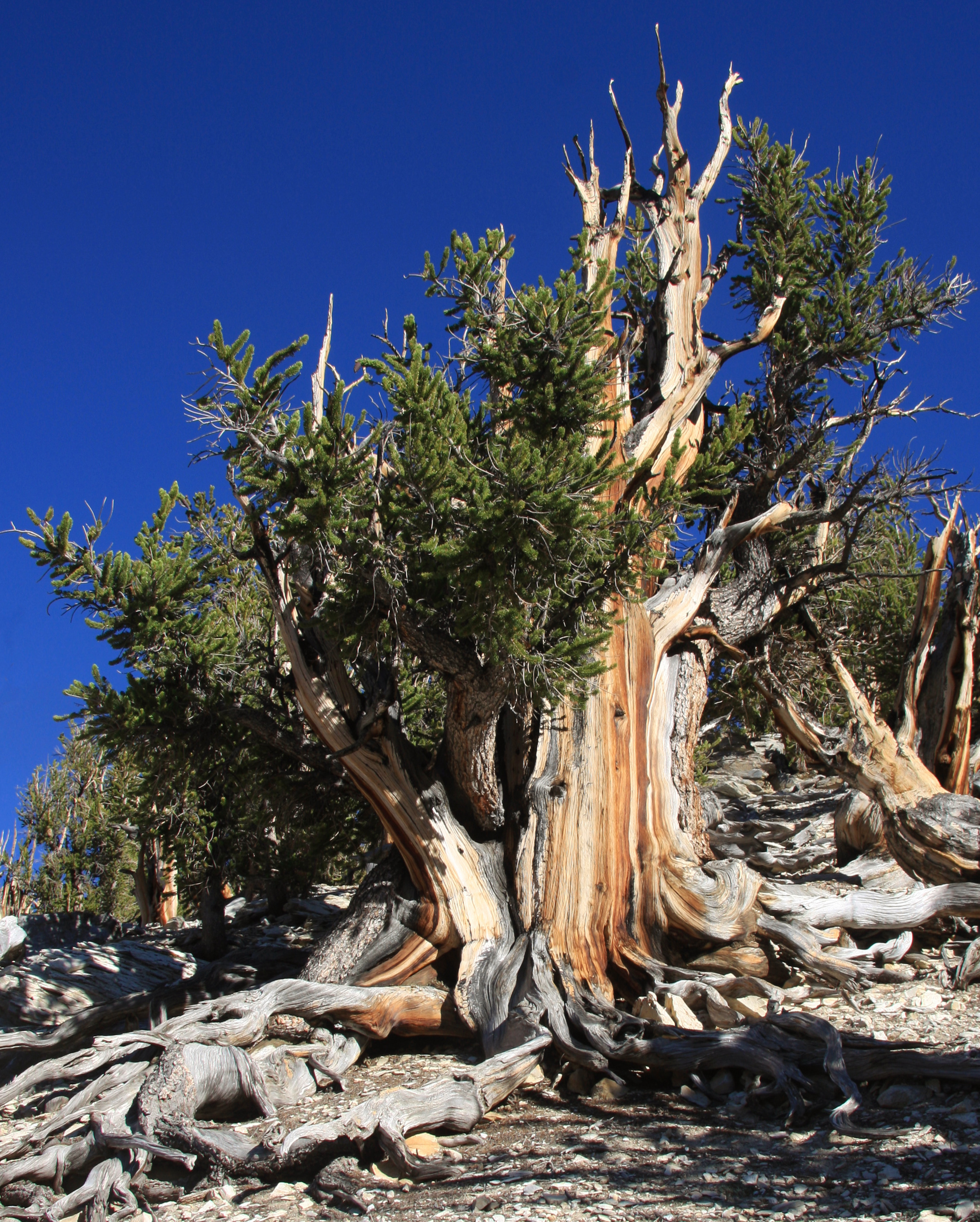
Great Basin Bristlecone Pine
Least ConcernWhat is a bristlecone pine? The Great Basin bristlecone pine (Pinus longaeva) is an extremely long-lived coniferous tree native to the high-altitude mountain ranges of the American Southwest. It is globally famous as the oldest known non-clonal living organism on Earth, with individual trees documented to be over 4,800 years old. Growing in harsh, wind-swept, alpine conditions where other plants cannot survive, these trees grow incredibly slowly, developing dense, resinous wood that resists decay.