
Douglas Fir
Quick Facts & Botanical Stats
Species Overview
What is a Douglas Fir? Pseudotsuga menziesii, the Douglas fir, is a massive coniferous evergreen tree belonging to the Pinaceae family. Native to western North America, it is one of the most commercially important timber trees globally. Despite its common name, it is not a true fir (genus Abies), but belongs to its own genus, Pseudotsuga (meaning 'false hemlock'). Douglas firs are key components of old-growth temperate rainforests, second in height only to coast redwoods.
Physical Appearance & Anatomy
What does a Douglas fir look like? The Douglas fir is a massive tree that can grow up to 100 meters tall. It has thick, dark brown, deeply furrowed bark that protects mature trees from fire. The needles are soft, flat, dark green, and cover the branches spirally, emitting a sweet, resinous scent when crushed. How do you identify Douglas fir cones? The female cones are highly distinctive, featuring three-pointed bracts that stick out between the scales, resembling the hind legs and tail of a mouse running into a hole.
Habitat & Growth Behavior
Where do Douglas firs grow? Douglas firs grow extensively from sea level to mid-elevations along the Pacific Northwest coast and the Rocky Mountains. They thrive in moist, acidic soils in regions with cool, wet winters. Douglas firs are moderately shade-tolerant when young but require sunlight as they mature. They are fire-adapted: mature trees have thick bark that allows them to survive low-to-moderate forest fires, which clear out competing shade-tolerant hemlocks.
Ecological Role & Symbioses
What animals rely on Douglas firs? Douglas firs are critical to forest ecosystems. Red tree voles nest in their canopies and eat their needles, while spotted owls nest in old-growth branches. How do they benefit wildlife? Deer and elk feed on their seedlings in winter, and diverse birds and rodents feed on the seeds. Their extensive root networks associate with ectomycorrhizal fungi, which link the trees together to share nutrients.
Reproduction, Lifecycle & Propagation
Douglas firs reproduce sexually. In spring, male cones release yellow pollen into the wind to fertilize female cones. The female cones mature in one season, releasing winged seeds in autumn. The seeds are carried by the wind and germinate in open, mineral soils. Douglas firs are long-lived, with coastal specimens commonly reaching ages of 500 to 1,000 years.
Conservation Status & Environmental Threats
The Douglas fir is classified as Least Concern on the IUCN Red List. It is abundant and widely managed in commercial timber plantations worldwide. Wild old-growth forests, however, have been severely reduced by historical logging. Modern threats include habitat fragmentation, severe wildfires exacerbated by climate change, and outbreaks of pests like the Douglas-fir beetle.
Interesting Fun Facts
- Despite its name, the Douglas fir is not a true fir; its scientific genus name Pseudotsuga translates to 'false hemlock'.
- The cones of the Douglas fir have unique three-pointed bracts that look like the rear half of a mouse hiding under the scales.
- It is the second-tallest tree species in the world, with historical records of trees reaching over 100 meters tall.
- The Douglas fir is one of the most popular species used for Christmas trees in North America.
Related Plants

Coast Redwood
EndangeredWhat is a Coast Redwood? Sequoia sempervirens, the coast redwood, is a massive coniferous evergreen tree belonging to the Cupressaceae family. It is the tallest living tree species on Earth, reaching heights of over 115 meters (377 feet). Restricted to a narrow coastal strip in California and Oregon, redwoods are ancient giants that can live for over 2,000 years. They form unique ecosystems characterized by thick bark, massive carbon storage, and a reliance on coastal fog.
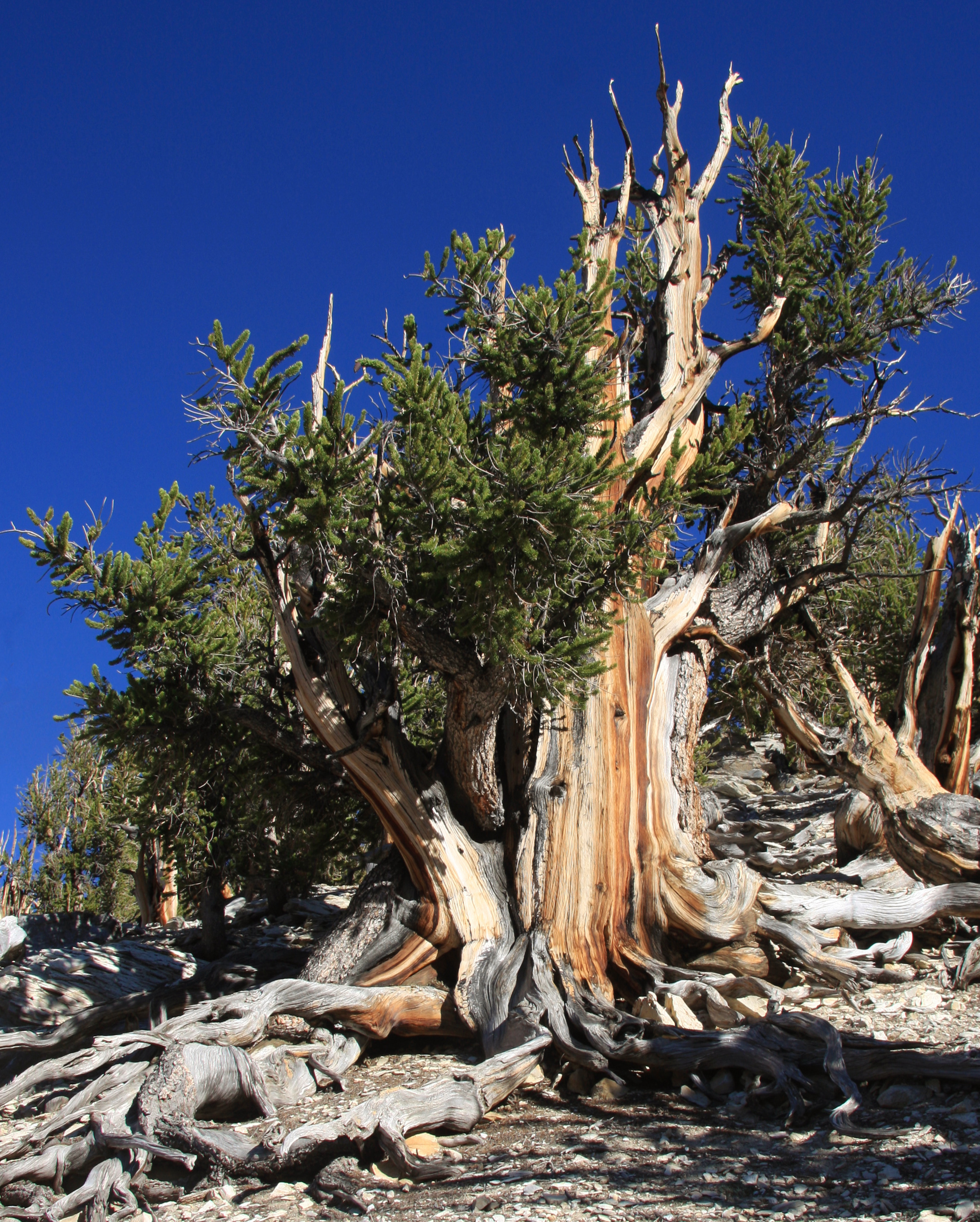
Great Basin Bristlecone Pine
Least ConcernWhat is a bristlecone pine? The Great Basin bristlecone pine (Pinus longaeva) is an extremely long-lived coniferous tree native to the high-altitude mountain ranges of the American Southwest. It is globally famous as the oldest known non-clonal living organism on Earth, with individual trees documented to be over 4,800 years old. Growing in harsh, wind-swept, alpine conditions where other plants cannot survive, these trees grow incredibly slowly, developing dense, resinous wood that resists decay.