
Giant Sequoia
Quick Facts & Botanical Stats
Species Overview
What is a Giant Sequoia? Sequoiadendron giganteum, the giant sequoia, is a massive coniferous evergreen tree in the Cupressaceae family. While coast redwoods are taller, giant sequoias are the largest trees on Earth by wood volume. How old do sequoias get? They are ancient giants, with individual trees living for over 3,000 years. They grow exclusively in a narrow mountain belt on the western slopes of the Sierra Nevada, adapted to survive forest fires.
Physical Appearance & Anatomy
What does a giant sequoia look like? The sequoia features a massive, conical trunk that tapers rapidly, covered in thick, spongy, reddish-brown bark. The leaves are small, scale-like, bluish-green, and overlap along the twigs. How big are giant sequoia cones? The cones are egg-shaped, measuring 4 to 7 cm long, and can remain green and closed on the tree for up to 20 years. The wood is extremely fibrous and resin-free.
Habitat & Growth Behavior
Where do giant sequoias grow? Sequoias grow in isolated mountain groves at elevations between 1,400 and 2,150 meters. They require abundant soil moisture from melting winter snowpack. Sequoias are fire-dependent: their thick bark protects them from heat, and the heat of forest fires causes their closed cones to dry, open, and drop seeds onto the nutrient-rich, ash-cleared soil.
Ecological Role & Symbioses
What is the ecological role of the giant sequoia? Mature sequoias dominate the forest canopy, creating microclimates that shelter diverse subalpine wildlife. How does fire help them? Minor ground fires clear out competing white firs and expose mineral soils, which are necessary for sequoia seed germination. The canopy provides nesting habitats for rare birds and squirrels.
Reproduction, Lifecycle & Propagation
Giant sequoias reproduce sexually. Wind carries pollen from male cones to female cones in spring. The seeds take two years to mature. Cones remain closed until opened by fire heat or the chewing of the sequoia bark beetle (Phymatodes nitidus) and Douglas squirrels. The tiny, winged seeds are dispersed by wind. Sequoias grow rapidly and can live for 2,000 to 3,500 years.
Conservation Status & Environmental Threats
The giant sequoia is listed as Endangered on the IUCN Red List. With only 75 active groves remaining, they are highly protected in national parks. Modern threats include climate change (causing snowpack decline and severe droughts) and high-intensity wildfires that burn hot enough to reach the upper canopies, killing mature trees.
Interesting Fun Facts
- The giant sequoia is the largest tree species on Earth by total wood volume; the 'General Sherman' tree has a volume of 52,500 cubic feet.
- Their spongy bark can grow up to 90 cm (3 feet) thick, containing tannic acid that makes it fireproof and resistant to pests.
- Sequoia cones require the heat of forest fires to open and release their seeds into the soil.
- The oldest known giant sequoia is estimated to be 3,500 years old, based on ring counts.
Related Plants

Coast Redwood
EndangeredWhat is a Coast Redwood? Sequoia sempervirens, the coast redwood, is a massive coniferous evergreen tree belonging to the Cupressaceae family. It is the tallest living tree species on Earth, reaching heights of over 115 meters (377 feet). Restricted to a narrow coastal strip in California and Oregon, redwoods are ancient giants that can live for over 2,000 years. They form unique ecosystems characterized by thick bark, massive carbon storage, and a reliance on coastal fog.
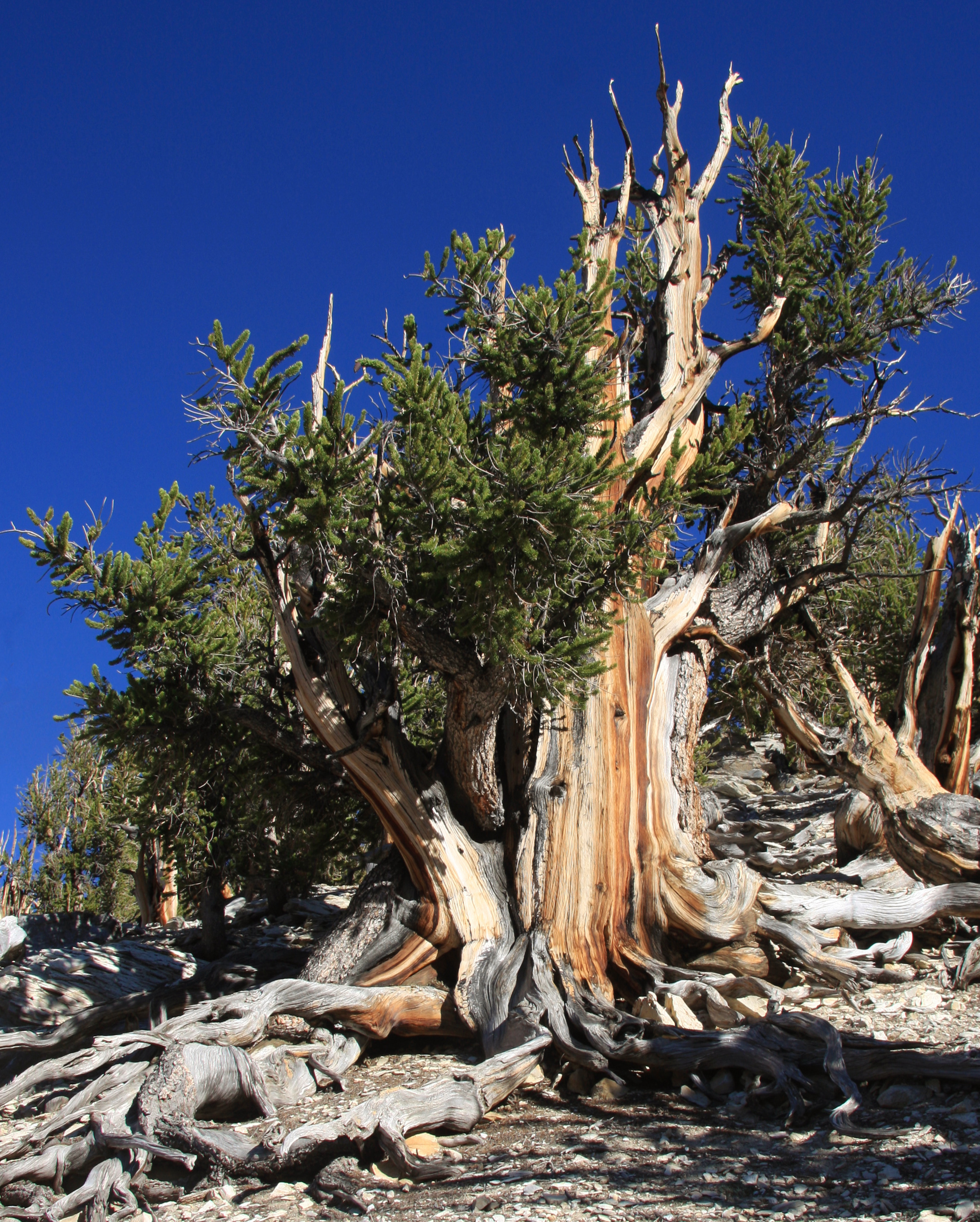
Great Basin Bristlecone Pine
Least ConcernWhat is a bristlecone pine? The Great Basin bristlecone pine (Pinus longaeva) is an extremely long-lived coniferous tree native to the high-altitude mountain ranges of the American Southwest. It is globally famous as the oldest known non-clonal living organism on Earth, with individual trees documented to be over 4,800 years old. Growing in harsh, wind-swept, alpine conditions where other plants cannot survive, these trees grow incredibly slowly, developing dense, resinous wood that resists decay.