
Common Sunflower
Quick Facts & Botanical Stats
Species Overview
What is a sunflower? The common sunflower (Helianthus annuus) is an annual herbaceous plant belonging to the Asteraceae (daisy) family. Native to North America, it is globally famous for its massive yellow flower heads that track the sun across the sky during their immature stage. Sunflowers are widely cultivated for their edible seeds, high-quality cooking oil, and ornamental value. They are also known for their phytoremediation capabilities, meaning they can extract toxic heavy metals and radiation from contaminated soils.
Physical Appearance & Anatomy
What does a sunflower look like? The sunflower features a thick, hairy, erect stem that grows to an average height of 1.5 to 3.5 meters (5 to 11 feet). It has large, heart-shaped green leaves with serrated margins arranged spirally along the stem. What is a sunflower head made of? The iconic 'flower' is actually a pseudanthium, or false flower head, consisting of thousands of individual flowers. The outer 'petals' are sterile ray florets that attract pollinators, while the central disc consists of fertile disc florets that produce the seeds. The seeds are teardrop-shaped and encased in hard, black-and-white striped hulls.
Habitat & Growth Behavior
Where do sunflowers grow? Sunflowers thrive in open grasslands, prairies, and agricultural fields with direct sunlight and deep, fertile, well-drained soils. They are famous for heliotropism: during the bud stage, the flower heads track the movement of the sun from east to west daily, returning to face east at night. Once the flower heads mature and bloom, they lock in an eastward-facing position. This keeps the flower heads warmer, which attracts more pollinators.
Ecological Role & Symbioses
What pollinators visit sunflowers? Sunflowers are high-value ecological plants that provide nectar and pollen for countless beneficial insects, including domestic honeybees, wild bumblebees, and various butterfly species. Their massive leaves provide feeding grounds for caterpillars. What animals eat sunflower seeds? In late summer, the seed heads become a crucial food source for migratory birds, squirrels, and small rodents, which feed on the high-fat seeds to store energy for winter.
Reproduction, Lifecycle & Propagation
How do sunflowers reproduce? Sunflowers reproduce sexually via insect pollination. The disc florets mature from the outer edge inward, producing pollen and receptive stigmas. After cross-pollination by insects, each floret develops into a single seed (achene). The entire lifecycle of the sunflower is completed within a single growing season: seeds germinate in spring, grow rapidly in summer, bloom, set seed, and die back with the winter frosts, dispersing seeds to ensure the next generation.
Conservation Status & Environmental Threats
The common sunflower is classified as Least Concern on the IUCN Red List. It is abundant both as a wild wildflower and a commercial crop. Wild populations are stable across North America, though they face minor threats from habitat fragmentation and hybridization with cultivated varieties. Agricultural crops are susceptible to fungal diseases like rust and downy mildew, which are managed through crop rotation and breeding resistant varieties.
Interesting Fun Facts
- Young sunflowers track the sun's path across the sky from east to west every day in a process called heliotropism.
- A single sunflower head can contain up to 2,000 individual flowers that develop into seeds.
- Sunflowers were planted at the Chernobyl and Fukushima disaster sites to extract radioactive isotopes from the soil.
- The tallest sunflower on record was grown in Germany in 2014 and measured 9.17 meters (30 feet 1 inch) tall.
Related Plants
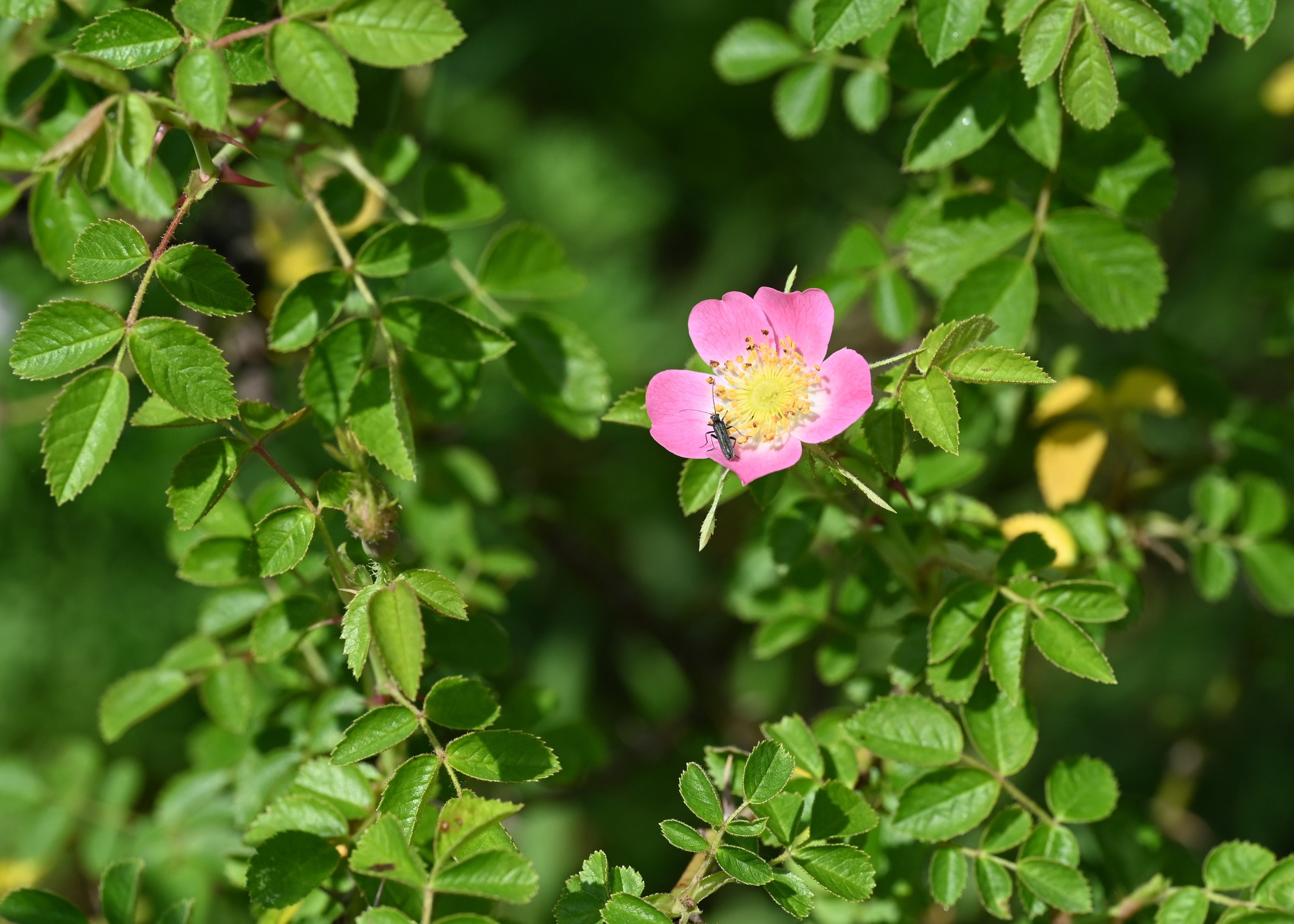
Garden Rose
Least ConcernWhat is a rose? The rose (Rosa rubiginosa) is a woody perennial flowering plant belonging to the Rosaceae family. Renowned globally for its ornamental beauty, fragrant blooms, and cultural significance, the rose is one of the most widely cultivated flowers. Roses grow as erect shrubs, climbing vines, or trailing groundcovers, often armed with sharp thorns that serve as physical defenses. In addition to their aesthetic appeal, roses yield rose hips, which are rich in Vitamin C and used in teas, syrups, and skincare products.

Moth Orchid
Least ConcernWhat is a moth orchid? The moth orchid (Phalaenopsis amabilis) is an epiphytic perennial plant belonging to the Orchidaceae family, one of the two largest families of flowering plants. Native to the warm, humid rainforests of Southeast Asia, it grows attached to the bark of trees rather than in soil. Known for its elegant, long-lasting flowers that resemble moths in flight, it is highly popular as an indoor houseplant and is a national flower of Indonesia.